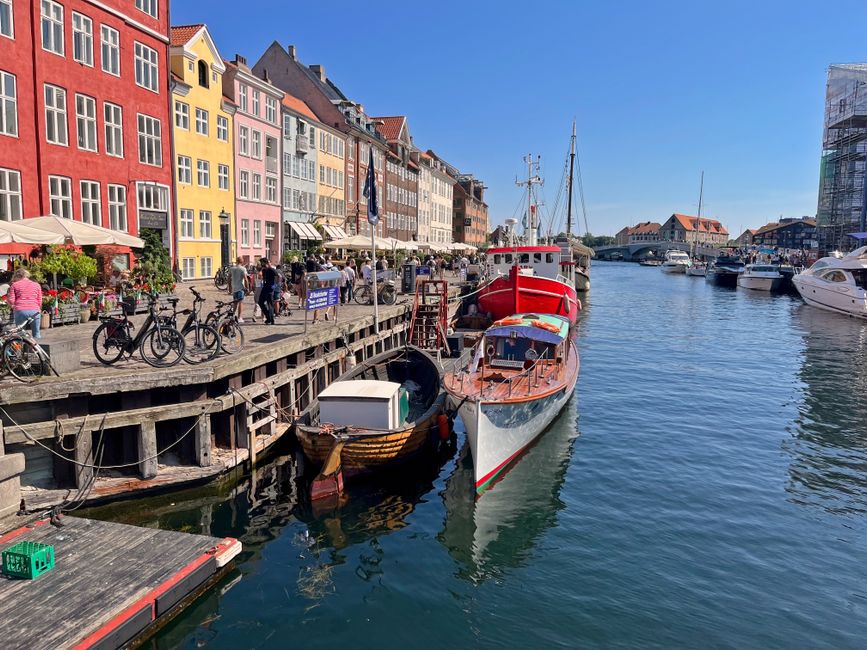
Hey fellow travelers—Copenhagen is one of those cities where you can totally do a full three days without a car.
Below you’ll get a transit-first itinerary that hops through neighborhoods (so you’re not crisscrossing constantly), plus a rainy-day backup plan so your day doesn’t collapse when the sky decides to do that Copenhagen thing.
Your Transit-First Three-Day Copenhagen Plan
Copenhagen is very “move-by-metro/rail/bus + walk a bit.” If you plan your day around areas that are close to each other, you’ll spend way more time sightseeing and way less time staring at your phone wondering which bus is actually going where.
Day 1: Central Copenhagen Classics (Indre By by Foot)
Keep this day tight on purpose. Most of what you want—waterfront views, old-town streets, castles, and gardens—is clustered enough that you’ll be walking a lot and taking short transit hops only when it saves time.
Key stops (all easy to reach by metro/bus and foot):
- Nyhavn
- Strøget
- Rosenborg Castle
- The Round Tower
- Church of Our Saviour
- Tivoli Gardens
A realistic flow (so you’re not sprinting):
- Start early at the waterfront for photos before crowds thicken.
- Work your way inward toward the main shopping street for that “Copenhagen stroll” vibe.
- Hit the castle area mid-morning or early afternoon (it’s a solid anchor point).
- Climb the tower/observe-from-above slot when the light is still decent.
- If you’re doing Church of Our Saviour, leave energy for the climb—then treat the rest of the day like a reward.
- Finish with Tivoli Gardens in the evening. Even if you’re not going on rides, it’s a nice “end of day” atmosphere.
Transit timing reality check: If you choose lodging near central transit hubs (or anywhere reasonably walkable to metro/rail), you can expect many connections to be roughly 10–20 minutes end-to-end, with the rest made up by walking.
Day 2: Harbor & Fort Views (Canals, Water, and Big Landmarks)
Day 2 is where Copenhagen feels extra “postcard,” but you still shouldn’t need a car. You’ll use transit for the waterfront stretches and then do most of your exploring on foot.
Key stops (stretch your legs, then hop when you need to):
- The Little Mermaid
- Kastellet
- Gefion Fountain
- Black Diamond (Royal Danish Library)
- Copenhagen Opera House
- Harbour canal cruise
How to pace it:
- Start with the iconic waterfront moment early—this is one of those spots that gets busy.
- Next, move into the fortress/green-space zone for a contrast (less “tour-group,” more open walking).
- Continue along the waterfront for a photo break at the fountain.
- Then head into the modern waterfront stretch for architecture and skyline views.
- Finish with a harbor canal cruise when you can—best case, you’ll catch the late light and feel like you actually “did Copenhagen,” not just visited it.
Transit timing reality check: Moving between harbor viewpoints and central waterfront areas is usually 15–25 minutes total when you combine short transit hops and walking. It’s not a “right there” day, but it’s absolutely manageable.
Day 3: Culture + Quirky Copenhagen (Frederiksberg and Beyond)
This is a day for museums, neighborhoods that feel a bit calmer than the busiest core streets, and one big “wow” stop.
Key stops (plan this as an ordered loop):
- Frederiksberg Palace
- Carlsberg Visitor Centre
- Ny Carlsberg Glyptotek
- Copenhagen Zoo
A flow that works well:
- Begin with Frederiksberg Palace for a quieter-feeling start.
- Move on to the Carlsberg area after lunch (it’s a nice “change of mood” after palaces and gardens).
- Use the museum slot for mid-afternoon—this is where you’ll slow down and enjoy yourself.
- End with the zoo if you want a late-afternoon/evening reset (and if you’re traveling with anyone who loves animals).
Transit timing reality check: This day often comes out to 20–35 minutes between major stops depending on where you’re based and how long you choose to wander.
Rainy-Day Swaps (Still Close, Still Satisfying)
If it rains, don’t fight it—swap outdoor stops for indoor ones while you keep your radius small. The goal is to reduce transit time to roughly 15–20 minutes for each switch, so you’re not turning “rain” into “a full-day logistics problem.”
If It’s Light Rain: Swap One Outdoor Stop, Not the Whole Day
Keep your itinerary structure (morning/afternoon/evening), but replace one “walk-and-look” segment with a museum or indoor experience.
Indoor swaps (easy to slot into your day):
- National Museum of Denmark
- Designmuseum Danmark
- Experimentarium
- Danish Architecture Centre
- Copenhagen Contemporary
- Planetarium Tycho Brahe
My rule of thumb:
- If you’re already in the central area, choose an indoor option that feels like a “same mood” replacement (history for castles, design/architecture for waterfront-architecture day, science for family-friendly energy).
- If you’re tired of umbrellas, pick one indoor anchor and then let your evening be flexible.
The “Rain Won’t Stop Me” Strategy (Go Short, Then Reward Yourself)
When weather is messy, you’ll be happier doing a smaller number of big indoor stops and leaving breathing room for later.
Try this approach:
- Choose one history/design/science anchor.
- Give yourself 90–120 minutes inside.
- Then do just one more outdoor photo stop (or skip it if the rain is coming sideways).
The “I Want Zero Stress” Strategy (Make One Afternoon Entirely Indoor)
If the forecast looks truly miserable, don’t half-commit.
Best way to keep things smooth:
- Keep morning as planned (even if you shorten it).
- Make your afternoon fully indoor with one or two of the swaps.
- Leave your final evening as a “whatever the weather allows” wander.
Where to Base Yourself (Neighborhood Hopping Without the Hassle)
You can stay anywhere in Copenhagen and still do this car-free—but your quality of life improves a lot if you pick a base near frequent metro/rail connections.
Staying Near the Central Core (Great for First-Time Copenhagen)
If you want an easy start and you don’t want to think too hard about routes, staying near the central parts of town is a win.
What it’s best for:
- Short transit hops to multiple neighborhoods
- Lots of walking options when the weather is decent
- Easy access to evening meals and late strolls
Trade-off: it can be more expensive, and some areas are busier.
Staying Around Vesterbro / Central West (Good Balance of Calm + Energy)
This area often feels like the “lived-in” Copenhagen you want—still convenient, but usually more relaxed than the busiest core.
What it’s best for:
- Great transit connections without feeling like you’re sleeping inside a tourist flow
- Easy evening plans
Trade-off: you might walk a bit more to reach specific harbor viewpoints.
Staying Toward Nørrebro (If You Like Quirkier Streets)
If you’re the type to wander into side streets and snack your way through a neighborhood, Nørrebro is a strong option.
What it’s best for:
- Character and variety in a compact area
- A “local life” vibe
Trade-off: you’ll rely on transit a bit more for some of the most central sights.
Staying Toward Østerbro (A Slightly Airier Feel)
Østerbro is a nice pick if you want things to feel a bit calmer and more spacious.
What it’s best for:
- More breathing room while still being connected
- Smoother mornings if you like quiet starts
Trade-off: you may need a touch more transit time to hop between far ends of the city.
Getting Around Without a Car (What Actually Makes This Work)
Here’s the practical bit: Copenhagen is designed for public transport and walking, so your goal isn’t to avoid transit—it’s to use it efficiently.
Use the Map Like a Local: “Metro/Train First, Walk the Last Bit”
For most sightseeing days, the best pattern is:
- Take metro/rail/bus for the “between-neighborhood” parts
- Walk for the “see it properly” parts
Why this matters: walking gets you charm; transit saves your legs.
Budget Time Like a Real Person (Not Like a Tour Bus)
Even if the city is compact, you still need time for:
- queues
- photo stops
- lingering in squares and courtyards
Quick planning estimates:
- Within a neighborhood: often 10–25 minutes depending on how much you wander
- Between major areas: often 15–35 minutes total door-to-door
Tickets and Timing (Keep It Simple)
I don’t want you trapped in a “perfect schedule” mindset—this is a three-day trip, not a military operation.
Instead, do this:
- If a stop tends to get busy, consider arriving earlier or aiming for off-peak hours.
- If you’re doing an indoor anchor (especially in rainy weather), go for a time slot that gives you breathing room.
Final Thoughts (Your Car-Free Copenhagen Should Feel Easy)
If you do nothing else: plan your days by neighborhoods, let transit handle the gaps, and keep one rainy-day backup that’s close enough to save your time.
Your No-Car Checklist for These Three Days
- Build each day around a small cluster of stops
- Expect walking—Copenhagen is best on foot when you’re not overheating
- Use rainy-day swaps to keep your radius small
- Don’t schedule every minute; leave space for detours and coffee
One Last Tip for Rainy Weather
When it’s raining, the best move is to swap one outdoor segment for an indoor anchor and then re-check the weather before committing to anything else. You’ll feel way more in control—and your trip stays fun instead of stressful.