Hey fellow safari travelers—if you’re planning your first Kenyan trip, you probably want the places where the big cats and elephants don’t just “might happen.” Below I’ll break down the best national parks (and the right reserves) for first-time safari travelers, with what to expect, where to base, and who each one is best for.
The greatest hits for first-time safari travelers

Maasai Mara National Reserve: the “wow” factor (big cats + big herds)
If Kenya had a poster, Maasai Mara would be on it—acacia-dotted plains, nonstop game drives, and a serious chance of seeing lions, cheetahs, and leopards.
What you can realistically expect
- Big cats: Lions are the stars for many visits; cheetahs are common enough to keep things interesting. Leopards happen, but sightings aren’t guaranteed.
- Wildebeest and herds: The Great Migration (especially wildebeest) is the headline—timing depends on the year.
- Other highlights: Elephant sightings can happen, plus tons of zebra and other grazers.
Best base city / area
- Base from: Nairobi (common for fly-in safaris) or Narok-side lodges.
- Where you’ll likely stay: Areas around Talek and the Mara’s accessible gate regions.
Who it’s best for
- First-timers who want the full safari feeling—high animal density and classic Kenya scenery.
- Anyone prioritizing lions/cheetahs and the strongest chance of dramatic predator-prey action.
Trade-offs to know upfront
- It can get busy during peak season (more vehicles around kills and crossings).
- Lodges in the “best” corridors can feel pricey.
Amboseli National Park: elephants with a side of Mount Kilimanjaro
Amboseli is the elephant park you’ll keep talking about. The views toward Mount Kilimanjaro are also a big deal on clear days.
What you can realistically expect
- Elephants: This is the main attraction. You’ll see them in groups, at water points, and across the open plains.
- Cats: Lions and cheetahs do show up, but Amboseli is more elephant-first than predator-first.
- Landscape variety: Open plains and water sources that concentrate animals.
Best base city / area
- Base from: Nairobi for a straightforward drive/transfer.
- Common gate access / logistics hubs: Lodges often operate around routes toward Amboseli’s entry points.
Who it’s best for
- Elephant lovers (photography-friendly, frequent sightings).
- Couples and families who want a “big animals every day” safari.
Trade-offs to know upfront
- The Kilimanjaro view depends on cloud cover.
- Dry-season conditions can mean animals cluster hard around water—great for game drives, but it’s a different vibe than a wide-open, spread-out landscape.
Lake Nakuru National Park: rhinos, flamingos, and a strong “variety day”
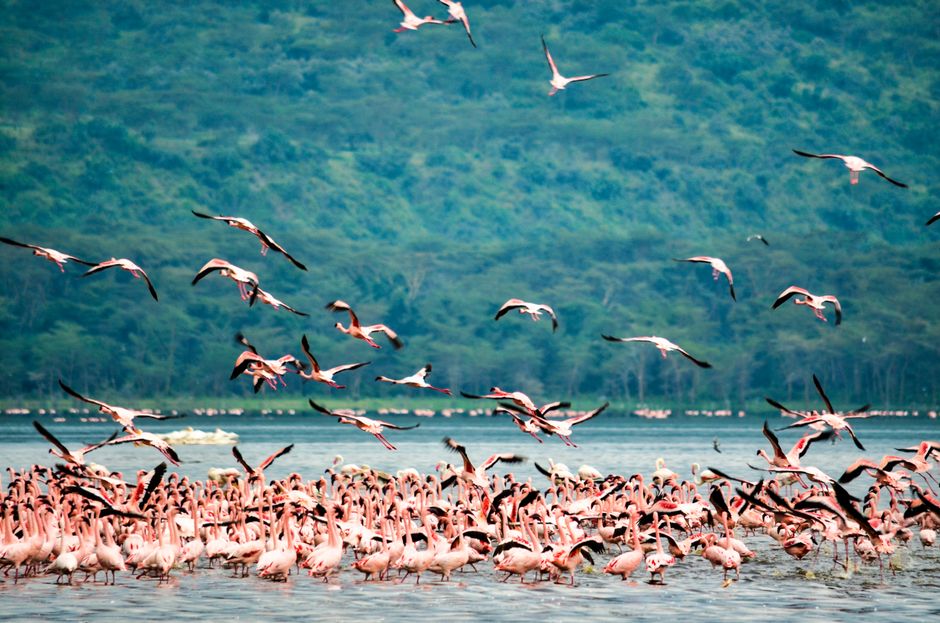
Lake Nakuru is the one you add when you want more than just the open savanna circuit. Flamingos can be spectacular, and rhinos are a major reason people make the trip.
What you can realistically expect
- Rhinos: Black and white rhino exist here (with ongoing conservation efforts). Sightings vary day to day.
- Bird life: Flamingos are a star if conditions line up.
- Big cats: You may see lions/leopards, but this isn’t as predictable as Mara for predators.
Best base city / area
- Base from: Nairobi or Naivasha (depending on your route).
- Many travelers pair it with stops around the Great Rift Valley.
Who it’s best for
- First-timers who want variety in one region (birds + rhinos + scenic drives).
- People who don’t want a “hard-core migration-only” trip.
Trade-offs to know upfront
- If you’re coming purely for lions and wildebeest, Nakuru might feel less on-brand than Mara.
- Animal sightings can be site- and day-dependent, especially for predators.
Herd energy and special wildlife regions

Samburu National Reserve: the “special five” vibe (and lots of motion)
Samburu is a northern Kenya reserve that feels different from the Mara/Massai triangle. It’s a great choice for first-timers who want variety and a higher chance of some “regional” animals.
What you can realistically expect
- Giraffes and zebras that you don’t see everywhere: Samburu is known for its unique wildlife mix.
- Predators: Lions and leopards are possible; cheetahs can happen.
- Water-related sightings: Game clusters around river areas when water availability shifts.
Best base city / area
- Base from: Nairobi (fly + drive) or Nanyuki / nearby gateway towns.
- Many itineraries anchor around Archer’s Post area lodges.
Who it’s best for
- First-timers who want to diversify beyond the classic southern circuit.
- Travelers who like “different-looking wildlife.”
Trade-offs to know upfront
- It’s not as famous globally as Mara or Amboseli, so you’ll want to choose a solid guide/lodge (quality matters more when you’re less sure what you’ll see).
- If you want pure “big migration” drama, Samburu won’t be your main event.
Tsavo East National Park: big landscapes, elephants, and wide-open drama
Tsavo is huge, and East Tsavo leans into that “I’m really out here” feeling—long drives, big skies, and frequent elephant moments.
What you can realistically expect
- Elephants: Often one of the biggest draws.
- Predators: Lions and leopards are possible; cheetahs can appear.
- Scenery: Massive, varied habitat—good for spotting wildlife moving through.
Best base city / area
- Base from: Nairobi or Mombasa (depending on whether you’re pairing safari + coast).
- Common gateway area: Voi and nearby entry logistics.
Who it’s best for
- First-timers who want a classic safari feel without the biggest crowd pressure you can get in Mara.
- Anyone combining safari with beach time in Kenya.
Trade-offs to know upfront
- Because Tsavo is so large, you’ll cover more ground to find the right concentrations.
- “Big cat sightings” can be great, but sometimes they’re less frequent than in the Mara’s dense predator hotspots.
Tsavo West National Park: more rivers/varied habitat (and great sightings when conditions align)
Tsavo West is the flip side of the coin—often with more “features” that can concentrate animals (depending on season).
What you can realistically expect
- Elephants: Still a major theme.
- Cats: Lions are possible; leopards can be sighted in suitable habitat.
- Water-driven wildlife: If water sources are active, animals tend to gather.
Best base city / area
- Base from: Mombasa or Nairobi.
- Common gateway area: Often Voi and routes toward Tsavo West entry points.
Who it’s best for
- First-timers who want a Tsavo experience with different habitat textures.
- Travelers who prefer mix-and-match wildlife days rather than only open-plains chasing.
Trade-offs to know upfront
- Like Tsavo East, expect a “big park = some driving” trade-off.
- It’s not a guarantee-factory for a specific species every day.
Quick add-ons near cities (high value if you’re short on time)
Nairobi National Park: the easiest safari “starter pack”
If your trip starts or ends in Nairobi, don’t sleep on this. Nairobi National Park can give you a real safari day without the full road/air commitment.
What you can realistically expect
- Big animals in a compact area: Lions, rhinos (reintroduced/managed in ways that support conservation), giraffes, and more.
- Great for a first game drive: It’s easy to do as Day 1 or last day.
- Less “classic wilderness” feel: You’ll be aware you’re close to the city.
Best base city / area
- Nairobi (obviously).
- Many travelers do an early morning drive, then move on.
Who it’s best for
- First-timers with limited time (or with a safari that’s mainly outside Nairobi).
- Families who want something that feels “real” quickly.
Trade-offs to know upfront
- Wildlife density can be good, but it won’t replace a full Maasai Mara/ Tsavo/ Amboseli-style safari.
- Expect fewer long “wander and roam” moments than in bigger parks.
Shimba Hills National Reserve: elephants in the forest (and a slower pace)
Shimba Hills feels greener, more textured, and generally more laid-back than the open-sky savannas. It’s a brilliant contrast if you’re coming from Mara or Amboseli.
What you can realistically expect
- Elephants: Often the headline attraction here.
- Special habitat: Forest and hilly terrain can make sightings feel more “secret world” than “endless plains.”
- Big cats: Possible, but usually not the same “high predictability” as the Mara.
Best base city / area
- Base from: Mombasa (most common for combining safari + coast).
Who it’s best for
- Travelers who want a different scenery style than the open savanna.
- Anyone who loves the idea of forest elephants and a calmer itinerary.
Trade-offs to know upfront
- It’s not the first choice if your only goal is “I must see lions every day.”
- Because it’s a different habitat, you’ll want a guide who knows where animals tend to show up.
How to choose your route (so you don’t waste days)

If you’re chasing big cats first
Go heavy on the places where predator sightings are simply more frequent and vehicle activity leads to better “eyes on” moments.
- Start with: Maasai Mara
- Add for balance:
- Tsavo East/West (excellent when conditions align)
- Samburu (for variety + possible predator sightings)
Reality check: Big cats are still wild animals—your odds improve with the right habitat, timing, and a good guide.
If you’re elephant-first (and you don’t care if it’s “not the migration”)
Elephants are your main event.
- Top pick: Amboseli
- Strong alternatives:
- Tsavo East/West
- Nairobi National Park (for an easy intro)
- Shimba Hills (forest scenery + elephant energy)
If you want a route that’s easy from your base city
Match parks to where your flights/hubs land.
- If you’re flying into Nairobi:
- Maasai Mara, Amboseli, Lake Nakuru, Nairobi National Park, Samburu (often fly + drive)
- If you’re adding a beach segment in Mombasa:
- Tsavo East/West, Shimba Hills
Trade-off to keep in mind: The easiest-to-plan route isn’t always the “most cinematic” one—so choose what matters most: comfort vs. maximum variety.
Practical safari tips that matter on Day 1
Lodge vs. tented camp: what changes for first-timers
You don’t need “fancy” to have a great safari, but you do want the right fit.
- Choose a lodge/camp that’s close to the action you care about (Mara corridor, Amboseli plains, Tsavo entry areas).
- Look for:
- Strong guides (ask about guiding experience, not just the marketing)
- Good game drive schedules (typically early morning + late afternoon)
- A setup that supports you if you’re traveling with kids or mobility needs
- Know the trade-off: Smaller camps can feel calmer, but amenities vary—check details.
Game drive timing: how to stack the odds
For most travelers, the best wildlife viewing happens when animals are more active.
- Prioritize:
- Early morning drives (cooler temperatures, animals moving)
- Late afternoon drives (lighting and activity pick up)
- Plan your expectations for midday:
- It can be quieter or hotter—this is normal.
What you can realistically “expect to see”
A good safari day feels like a chain of small wins.
- Often seen on many safaris: giraffes, zebras, antelope types, lots of birdlife
- Sometimes seen (but you shouldn’t bank on it): leopards on the dot, every cheetah encounter, constant big cat drama
- Species that depend heavily on location/timing:
- Wildebeest migration timing (if you’re aiming for that)
- Rhino sightings (varies by day and managed areas)
- Elephants (tend to be more reliable in key elephant parks, but still not “every minute”)
Final thoughts: building a Kenya safari that fits you
Your simplest first-timer combo
If you want an itinerary that checks most boxes without overcomplicating logistics, consider:
- 1 “big cats + herds” base: Maasai Mara
- 1 “elephants” base: Amboseli (or Tsavo if you’re pairing with the coast)
- Optional variety day:
- Lake Nakuru (rhinos + flamingos) OR Samburu (different northern wildlife) OR Nairobi NP (if time is tight)
Quick reality check (the part nobody should skip)
- Peak season is brilliant—but busier. If you hate crowds, you may want to be flexible with timing.
- The best safari is the one you can actually enjoy. Long drives and rushed hotel changes are exhausting—plan fewer moves and more game drives.
If you tell me your travel month, trip length, and whether you want to include the coast, I can suggest a straightforward route using the parks above—without the “too many checkboxes” feeling.


