Hey fellow travelers—if you’re trying to get from Lisbon to Porto without a car, you’re in the right place. I’ll walk you through the train-and-bus options, typical timings, which stations matter, and how to handle luggage once you arrive.
If you’re staring at timetables right now thinking “okay… but where do these buses actually stop, and what about luggage?”, this is for you.
1) Train vs Bus: The Fast Way and the Flexible Way
Let’s start with the decision, because it’s mostly that simple.
When trains are the better pick
- You want the smoothest ride (fewer traffic surprises).
- You care about comfort and having an easier time moving around.
- You’d rather arrive near the core of the city without an extra hop.
When buses are the better pick
- You need more departure times across the day.
- You’re traveling with a slightly “bulkier” luggage setup and want predictable undercarriage storage.
- You’re trying to keep costs down (it’s not always cheaper, but it’s often competitive).
A practical rule of thumb
- If you see a train that fits your day, choose the train.
- If train times are annoying or you’re traveling on a less busy day, switch to bus.
2) Where You’ll Depart and Arrive (Stations You’ll Keep Seeing)
Before you book anything, you need to know the names. Lisbon and Porto have multiple “big” hubs, and it’s easy to accidentally aim for the wrong one.
Key departures in Lisbon
- Lisboa-Santa Apolónia (common train departure)
- Lisboa-Oriente (another major train/transport area)
- Sete Rios (major bus terminal)
Key arrivals in Porto
- Porto-Campanhã (major arrival for trains)
- Porto-São Bento (central train arrival)
- Rodoviária do Porto (Terminal) (main bus terminal area)
- Trindade (useful metro hub for getting to lots of neighbourhoods)
Why the “which station?” detail matters
- Time on paper might be similar, but the real time includes getting from the station to your hotel.
- In Porto especially, arriving at Campanhã vs São Bento vs the bus terminal changes how easy your last mile feels.
3) Train From Lisbon to Porto: Schedules, Time, and What to Expect
Trains are the go-to if your priority is a predictable journey. But schedules vary by day and season, so think in patterns, then confirm the exact timetable.
Typical journey times (what you can plan around)
- Fast services are usually around ~2h45 to ~3h15.
- Other standard daytime services often land around ~3h to ~4h depending on the route/stops.
How often trains run
- In general, you’ll find multiple departures through the day.
- On many days, it’s not “every hour,” but it’s usually enough that you can pick a morning, midday, or evening option without too much stress.
- If you’re traveling in peak season, check early—some services fill up.
Where to sit and how to manage your space
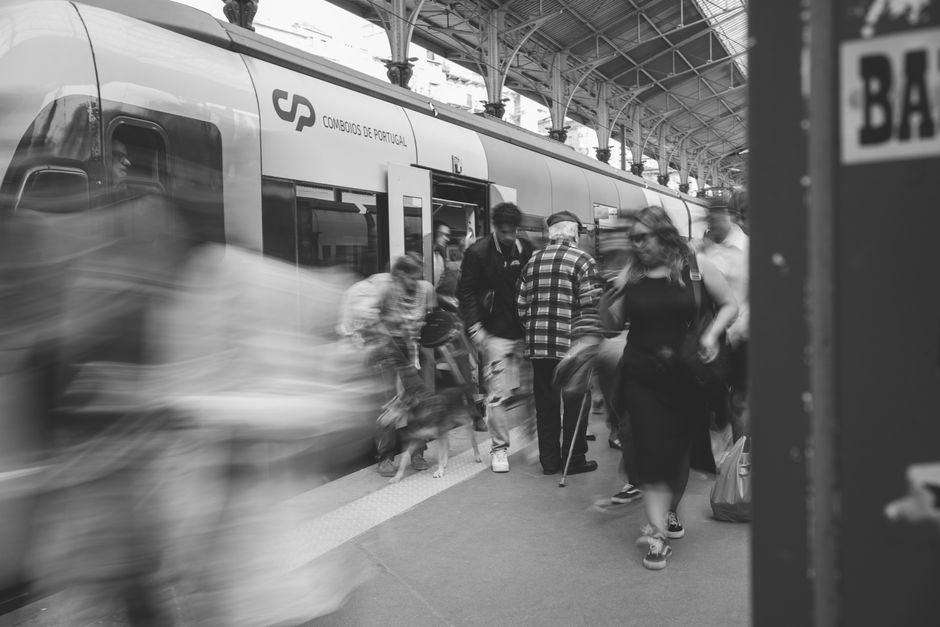
Trains are great, but luggage logistics can get cramped on busy services.
- Carry-on (small backpack/roller): you’ll usually manage fine in the seat area or nearby racks.
- Larger roller: aim for a seat where you can keep it at your feet or use available overhead/storage options.
- Peak travel: if the train is packed, don’t assume there will be perfect space for a big bag.
4) Bus From Lisbon to Porto: How the Timetable Feels and Travel Time Reality
Buses are often more “frequent on paper,” and they can be a lifesaver when train times don’t match your plans. The trade-off is traffic and road conditions.
Typical journey times (plan buffers)
- Many direct-ish journeys land around ~3h30 to ~4h30.
- Depending on the exact service, you can see longer trips when there are stops or slower segments.
How often buses run
- On many days, buses operate multiple times throughout the day.
- It’s common to see departures spread from morning into late afternoon/evening, so you’ve usually got options.
- The schedule you see depends on your day of travel (weekdays vs weekends can differ).
Stops and “where you get off”
This is the one thing to check carefully.
- Confirm whether your bus arrives at Porto’s main bus terminal area (Rodoviária do Porto) or if it uses another drop-off point.
- If you’re booked at a hotel near the station/metro lines, the exact arrival point affects how long the last mile takes.
5) Luggage Without Stress: What Works on Trains and Buses
No one wants to arrive looking like they wrestled a suitcase through a tornado. Here’s how to keep it easy.
Trains: keep it manageable
- If you’ve got a roller, travel with it upright and be ready to lift if there’s any step/storage constraint.
- Pack the stuff you’ll need for the trip in a side pocket or small day bag (water, headphones, charger).
- If you’re using the overhead area, don’t overstuff—jamming a bag up there is how you end up late (and annoyed).
Buses: understand undercarriage storage
- Most buses handle big luggage via under-bus compartments.
- Label your bag and keep essentials on you (passports/cards/medicine if needed).
- If you need to access something during the ride, don’t bury it—put frequently used items in your main compartment where you can reach it.
Seat strategy
- For trains: pick a seat that gives you space to keep your bag without blocking the aisle.
- For buses: if you’re sensitive to motion, consider choosing a seat slightly closer to the front/middle (exact best spot varies by vehicle).
6) Last-Mile Connections in Porto: Getting From Station to Your Day
Here’s where the “no car” plan either feels brilliant or mildly annoying.
If you arrive at Porto-São Bento
- Great for getting into the central/most walkable areas quickly.
- If you’re staying near sights, cafés, or your first meeting point, it usually means less planning.
If you arrive at Porto-Campanhã
- It’s a big hub, so transport options are solid.
- Plan for a short onward journey into the central areas.
- Practical approach: aim for the metro connection toward Trindade or onwards to the main areas you’re targeting.
If you arrive at Rodoviária do Porto (Terminal)
- You’ll usually need a short connection to reach your neighbourhood comfortably.
- Metro/bus/taxi options are typically available, but the best choice depends on where your hotel is.
When it makes sense to pre-plan the ride
If you’re traveling with multiple bags (or you just don’t want to think after a long journey), I’ve used GetTransfer once or twice for the straightforward “station to hotel” leg in Porto—it’s not glamorous, but it saves time and hassle.
7) How to Pick the Best Option for Your Day (Quick Decisions)
You don’t need the “perfect” plan—you need the plan that fits your timing, luggage, and energy level.
If your priority is speed and simplicity
- Choose a train with a journey time around ~3 hours.
- Aim for arrival at a station that minimizes last-mile stress for your hotel area.
If your priority is flexible departure times (or better value)
- Choose a bus, especially if you’re finding a schedule that matches your day better.
- Build in a small buffer for traffic and stops.
My quick “do this now” checklist
- Confirm your Lisbon departure point (Santa Apolónia vs Oriente vs Sete Rios).
- Confirm your Porto arrival point (Campanhã vs São Bento vs the bus terminal).
- Check luggage rules for the specific ticket/service you’re looking at.
- Once booked, map the last-mile route and decide: walk/metro/taxi.
Final Thoughts: You’ll Get There—Just Don’t Overlook the Station Names
Lisbon to Porto is one of those routes where you really don’t need a car—you can do it comfortably by train or bus, and you’ll still have plenty of time to enjoy Porto when you arrive.
If you take just one thing from this: double-check the station/terminal names before you commit. That’s the detail that most often turns a smooth plan into a late, luggage-heavy scramble.
If you want, tell me what time of day you’re traveling (morning vs evening) and where in Porto you’re staying, and I’ll help you choose the most painless departure/arrival combination.