Hey fellow travelers—if you’re staring at the Copenhagen Card and the Copenhagen City Pass and wondering which one saves you money, you’re in the right place. I’ll help you pick based on how many museums you’ll actually visit, how much you’ll use public transport, and which attractions you’ll want to add à la carte.
Let’s be honest: both passes can feel like a “sounds great” purchase… right up until you realize you accidentally planned a trip that’s heavy on neighborhoods and light on museums, or you booked half your day tours outside the pass. This is the way I sort it out fast.
The quick verdict: which pass fits your trip?

Buy the Copenhagen Card if you’ll stack museums (and keep changing your mind)
I’d lean Copenhagen Card if your itinerary has a few of these vibes:
- You want to visit several museums across different days.
- You plan to bounce between districts (and don’t want to think about tickets every time).
- You’re the type who’ll say, “We’ll just pop into that museum—why not?”
- You’re traveling in peak season or weekends, when timed entries and queues can be a headache and you want to reduce friction.
Choose the City Pass if you know your must-dos
A City Pass tends to work best when you:
- Already have a shortlist of “we’re definitely doing these attractions.”
- Don’t mind checking the included list and building your day around it.
- Are okay with the pass not covering every museum you find interesting.
- Prefer fewer stops, but more “anchors” (one or two big attractions, then neighborhoods on foot).
Skip both (or go mixed) if your plan is light on paid entries
This is the trade-off people miss. You may not need either pass if:
- You’ll visit only one paid museum/attraction.
- Your days are mostly walking loops (and you’ll rarely use buses/metro).
- You’re planning attractions that are outside what each pass covers.
My practical rule: if you can’t name at least 3–4 paid indoor stops you’ll realistically do, don’t start with an all-in pass.
Museum math: estimate how many paid entries you’ll actually use

Start with your “price-check” shortlist
Instead of looking at the pass brochure first, I recommend building a realistic list of what you’d pay for anyway. Copenhagen is full of great free/low-cost moments—but the paid ones are what decide the pass.
Price-check targets (the kind of places you can plug into the pass-versus-pay calculation):
- Tivoli Gardens
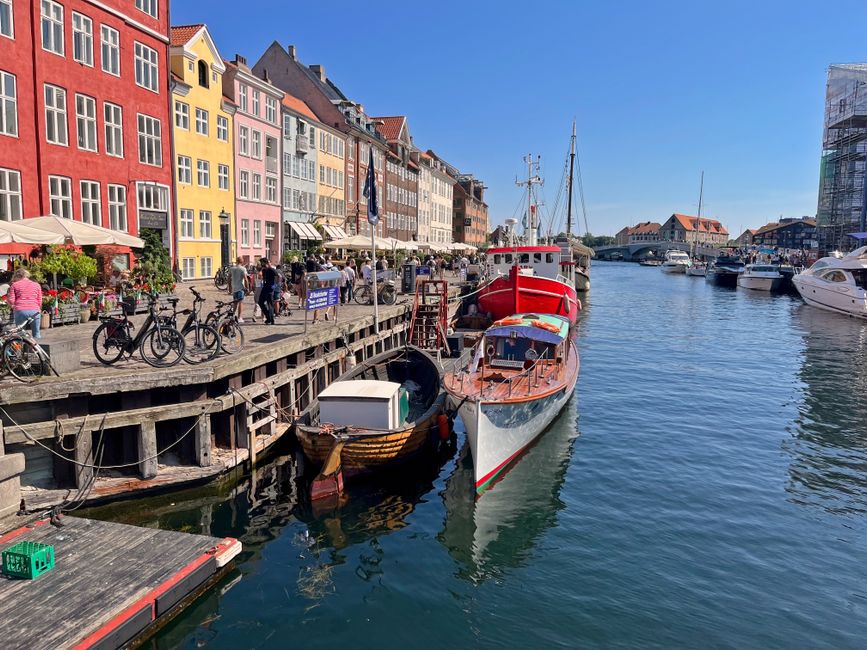
- Nyhavn & a canal cruise
- The Little Mermaid (as a viewpoint stop + nearby area time)
- The National Museum of Denmark
- Ny Carlsberg Glyptotek
- Rosenborg Castle & Royal Gardens
- Christiansborg Palace (and the surrounding area)
- Rundetaarn (Round Tower)
- Danish Jewish Museum (Jewish Museum Denmark)
- Danish Architecture Centre (DAC)
- Experimentarium
- Copenhagen Zoo
Now, don’t worry about whether these are definitely included by each pass (those lists can change). Just treat this as your “things we’d buy tickets for” reality check.
Compare “pass value” with your expected museum count
Because exact pricing and inclusions can vary by season and pass type, I’m not going to pretend the math is identical for everyone. But the pattern is usually:
- Copenhagen Card becomes worth it once you’re doing multiple paid entries across your stay.
- City Pass becomes worth it when your included-attraction list matches your shortlist closely.
A quick way to estimate:
- Pick the number of paid museum/attraction entries you’ll do.
- Add up what those would cost individually (or at least check the current ticket prices).
- Compare that against the pass cost.
If you’re unsure what to guess, use scenarios:
- Low day: 1 paid entry → both passes often feel overpriced.
- Balanced day: 2 paid entries → Copenhagen Card often starts looking better.
- Museum-heavy: 3+ paid entries across the trip → Copenhagen Card usually shines, assuming the places you want are covered.
Watch for the “included but not always” details
Even when a pass includes a museum, the devil is in the fine print. Before you buy, check things like:
- Whether special exhibitions have separate tickets.
- Whether you need timed entry / reservations at certain venues.
- Whether the pass covers entry on the day you’re actually going (opening hours can shift, and some days are simply busier).
- Whether “included” means free entry only or free entry plus priority access (those are different benefits).
This is where Copenhagen Card vs City Pass can flip. One might include the museum you care about, while the other covers it indirectly (or not at all).
Transit habits: unlimited rides vs “we’ll figure it out” commuting

Think in “how many rides will we really take?” terms
Ask yourself:
- Will you start each day with a short hop and then walk a lot?
- Or will you be using metro/bus several times per day?
- Are you doing day trips inside Copenhagen boundaries?
A useful way to estimate:
- If you’ll take transit most days, an unlimited-included pass can feel like a “set it and forget it” win.
- If you’ll take transit occasionally, you might save money by buying tickets separately.
When unlimited public transport actually pays off
Unlimited transit tends to be worth it when you:
- Plan for multiple stops across different neighborhoods.
- Expect at least one “we changed plans” moment.
- Don’t want to calculate the cost of every single ride.
The hidden benefit is stress reduction. If you’re walking back-and-forth anyway, transit becomes a tool to keep your days from collapsing.
When transit passes can be wasted money
Transit value drops if:
- Your accommodation is in a central hub and your itinerary clusters around it.
- You’re mainly doing short transfers you could replace with walking.
- You’re traveling with someone who hates public transport (it happens!).
If you’re biking a lot, too, be careful: passes don’t always interact neatly with bike rentals. In that case, transit savings may matter less.
Attractions à la carte: how each pass behaves when you mix plans

Copenhagen Card: usually best for “more entries, fewer add-on surprises”
Copenhagen Card is typically strongest when you want:
- Multiple paid venues without micromanaging.
- The option to swap a museum plan without paying full price every time.
- Fewer “Wait, is this included?” moments.
Trade-off to expect:
- If you end up doing fewer attractions than you planned, you can feel like you over-bought.
City Pass: usually best for “pick a handful of attractions and commit”
City Pass is often designed around bundled entry and a defined set of attractions.
That can be great when:
- Your must-dos match the included list.
- You don’t mind adjusting your plan to fit what’s covered.
But if you’re the type to:
- Chase whatever looks interesting that day, or
- Add extra museums at the last minute,
…then you may end up paying à la carte more often.
The sample-day test (my favorite way to decide)
Before buying, map out one full day (not the whole trip) and see where the gap appears.
Do this:
- Choose a realistic day: morning museum, lunch neighborhood, afternoon attraction.
- Mark which places you want and which pass entries cover.
- Then note what you’d have to buy separately.
If you find yourself paying full price for 2+ attractions on the same day, that’s a sign the pass isn’t aligned with your style.
Reservations, opening hours, and the hassle factor
Even if the pass is “cheaper,” it can still feel like a loss if it creates friction.
Timed entry and peak-day chaos
Copenhagen can get busy—especially around major attractions and popular museums. Before you settle on a pass, check:
- Whether specific venues require timed tickets.
- Whether you’ll need to book in advance.
- Whether the pass affects what entry times you can choose.
If you dislike planning ahead, Copenhagen Card can feel safer because you’re more likely to have options when plans change.
Weather-proofing: decide what you’ll do if it rains
Rain in Copenhagen isn’t the end of the world, but it can change your day.
To avoid pass regret, think:
- Which museums are your backup options?
- Will your pass cover those backups?
- If one museum is closed, do you have a second covered option nearby?
Don’t assume “included” means “skip the line”
This one trips people up.
Some venues treat pass entry as regular entry (you still queue), while others streamline it. So instead of expecting a miracle, plan for:
- Buying into flexibility (especially with timed slots).
- Arriving early for the places that tend to have lines.
And if you’re visiting in peak season, build in buffer time. Passes are supposed to reduce decision stress, not create it.
How to decide in 10 minutes (a practical checklist)
Here’s my quick, no-overthinking process.
Your decision checklist
Score yourself with quick yes/no answers:
- Museums: Will you visit 3+ paid museums/attractions during your trip?
- Consistency: Are your top picks likely to be covered (per the current included list)?
- Transit: Will you take transit at least several times during your stay?
- Flexibility: Do you want the freedom to swap plans mid-trip?
- Add-ons: Are you planning to add a couple of major attractions à la carte anyway?
- Planning style: Are you comfortable checking reservation rules ahead of time?
How I interpret it:
- Lots of yes on museums + transit + flexibility → Copenhagen Card often makes the most sense.
- Lots of yes on “we know what we’re doing” and the included list matches your shortlist → City Pass tends to win.
- Lots of no (especially on museum count) → consider paying individually and only using tickets for the big stuff.
Common mistakes (so you don’t overspend)
These are the errors I’ve seen—and made—while buying passes:
- Buying for a museum you won’t end up loving. Pick the ones you’d actually be excited to return to.
- Counting attractions you can’t realistically fit. Copenhagen days move fast; “maybe” becomes “nope.”
- Ignoring special exhibition rules. Included general entry might not cover everything.
- Forgetting transit days don’t always equal transit rides. If you’re walking most places, unlimited can be wasted.
- Assuming every pass benefit works the same way at each venue. Always skim the venue’s pass notes.
Final thoughts: my go-to approach
If you want my rule of thumb: buy the pass that matches your travel personality.
- If you like wandering into museums, changing your mind, and covering a lot of paid entry over several days, the Copenhagen Card is usually the smoother choice.
- If you want a tight itinerary built around a handful of included attractions, and you’re okay paying separately for anything outside the bundle, the City Pass can be better value.
And if you’re still on the fence? Build a one-day sample plan with your own shortlist, check whether the places you picked are actually covered by the pass rules, then choose the option that makes your trip feel easiest—not just cheapest on paper.