Hey there travel enthusiasts and welcome to my post where I’ll walk you through the strangest day trip I’ve taken out of Amsterdam — a small town in North Brabant called Baarle, where I crossed an international border on my way to pay for a coffee.
That’s not a figure of speech. There’s a line of white crosses set into the pavement outside the café, with a B on one side and NL on the other. It runs under the doorway, across the floor, and out the other side. Half the terrace is in the Netherlands. Half of it is in Belgium. Nobody sitting there finds this remarkable, which is somehow the best part of the whole day.
Baarle is really two towns wearing the same coat. Baarle-Hertog is Belgian. Baarle-Nassau is Dutch. And they aren’t next to each other — they’re inside each other: 22 Belgian enclaves scattered through Dutch territory, with a handful of small Dutch counter-enclaves sitting inside those Belgian pieces. (You’ll see the number given as seven or eight depending on who’s counting and how they treat one awkward parcel. Nobody seems bothered by the discrepancy, and after an hour there, neither was I.)
Two mayors. Two town halls. Two police forces. One extremely patient postal service.
One small practical thing before we start: if you’re travelling from outside Europe, your phone will hop between Dutch and Belgian networks all day here — sometimes on the same street. I sorted that out before I left with a single multi-country eSIM, and I’ll come back to it properly further down. Flagging it now only because it’s the one thing that’s genuinely annoying to fix while you’re standing on an international border with no signal.
Getting to Baarle from Amsterdam
Let’s be honest about this up front: Baarle is a long day trip from Amsterdam, not a quick one. It’s absolutely doable in a day — I did it — but you want to be out the door early rather than ambling to the station at eleven.
By train and bus (what I did):
- Amsterdam Centraal to Breda, direct intercity, roughly 1 hour 20 to 1 hour 30. There’s a faster Intercity Direct service on this corridor that trims it closer to an hour, but it carries a supplement — worth it on the way out, less so on the way back.
- From Breda Centraal, take the Bravo bus 132 towards Baarle-Nassau and get off at Sint-Janstraat. That leg is about 40 minutes.
- Total: roughly two hours each way, so budget four hours of travel and five or six on the ground.
A word on the bus: it is not a metro. Check the timetable for your actual day before you commit to the plan, and — more importantly — check the last one back. Missing it is a very expensive taxi.
By car: around 1 hour 45 from Amsterdam, and genuinely the more flexible option. Parking in and around the centre is straightforward, and a car is what lets you reach the outlying stuff — the Dodendraad memorial in particular — without eating your whole afternoon.
Better bases, if you have the choice:
- Breda or Tilburg — the same bus ride, minus the two-hour train. If you’re building an itinerary from scratch, this is the smart move.
- Turnhout or Antwerp, if you’re coming at it from the Belgian side. Turnhout is very close.
Trade-off: from Amsterdam you’re spending four hours in transit for a town you can walk across in twenty minutes. I still think it’s worth it — but go knowing that, and don’t try to bolt a second destination onto the same day.
So why is one town in two countries?
This is the bit that makes the whole day click, so it’s worth two minutes.
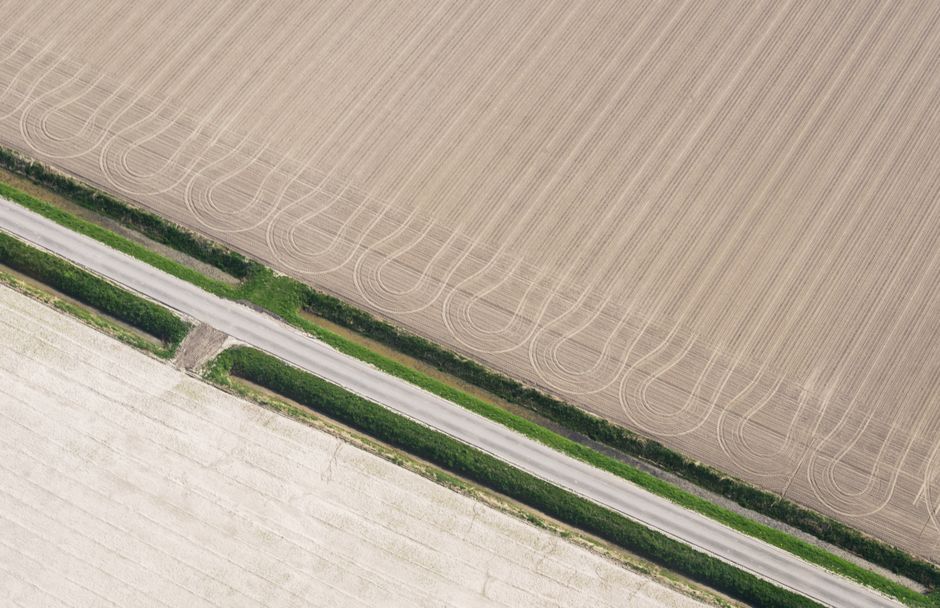
It starts in 1198, with a land deal between the Lord of Breda and the Duke of Brabant. Crucially, the land wasn’t split along a line — it was split plot by plot. Some fields went one way, some the other, and the arrangement was never tidied up. It just got inherited, sold, subdivided and re-inherited for the next six hundred years.
Then, in 1843, the Treaty of Maastricht fixed the modern Belgian–Dutch border. Everywhere else, surveyors drew a line. In Baarle they couldn’t — the medieval ownership was too tangled. So they did the only thing left: they went through the town parcel by parcel, assigning a nationality to each of 5,732 individual plots of land.
That’s why the border here isn’t a line. It’s a shape — and a genuinely insane one, full of right angles, dead ends and slivers.
My favourite consequence of all this is the front-door rule: a building’s nationality is decided by where its front door opens. Which means that, historically, if you didn’t like your tax regime, you could move your door. People have actually done it.
What I’d actually do with the day
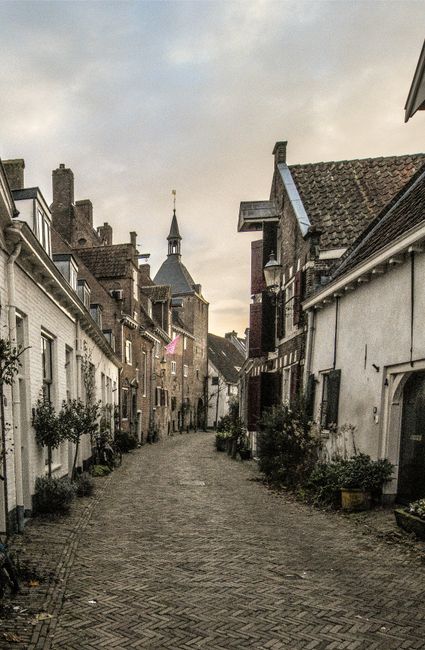
Baarle is small. You are not going to run out of daylight. What you will do is spend far longer than you expected staring at the ground, which is the correct way to visit.
1) Start at the tourist office on the Singel — get the map first
Don’t skip this and wing it. The tourist information office on the Singel hands out a proper border map with the enclaves drawn on it, plus suggested walking routes, and there’s a small museum downstairs covering the border’s history. Fifteen minutes here turns “nice brick town” into “oh, that’s what I’m looking at.”
Practical: grab the map, then work outwards. The whole core is walkable.
2) Walk the Singel and read the pavement
The Singel is the commercial spine of the town, and it’s where the council has been kindest to visitors: the border is painted and studded straight into the pavement, with B and NL on either side so you always know which country you’re standing in.
What to look for:
- The moments where the line takes a hard 90-degree turn mid-street. There is no logic to it and that’s the joy.
- Shopfronts where the line passes through the door rather than beside it.
- Two sets of street furniture, two styles of signage, sometimes on the same block.
Trade-off: this is a slow, heads-down kind of sightseeing. If you need a big-ticket monument to feel like you’ve done somewhere, Baarle will frustrate you.
3) Café Den Engel — sit at a table that’s in two countries
Singel 3. The terrace is bisected by the border, and yes, you can pick a table where the line runs down the middle. It is the single most photographed thing in Baarle and I completely understand why.
How I’d play it: coffee mid-morning when it’s quiet, rather than trying to fight for the border table at lunch.
4) The house with two front doors — Loveren 2/19
A private home where the border runs through the front door, so the building carries two house numbers: a Belgian one and a Dutch one, mounted side by side with little flags to tell you which is which. It’s a house. People live there. Take your photo from the street, be quick and be polite about it.
5) Shops that operate in two countries at once
This is where the border stops being a novelty and becomes genuinely funny:
- De Biergrens, Molenstraat 98 — a drinks shop straddling the line, complete with flag markings. Different countries, different alcohol rules, one shop.
- Zeeman, Stationsstraat 1A — the border marked right across the shop floor.
- Look out for businesses carrying two addresses and two phone numbers because that’s simply what the paperwork requires.
6) The heavier history — Dodendraad, and the liberation memorial
Baarle isn’t only a curiosity, and I’d push back on treating it as one.
- The Dodendraad (“wire of death”) is a reconstruction of the electrified fence Germany strung along this border in the First World War. Estimates of the civilian dead who tried to cross it run into the thousands. It’s outside the centre, and it’s the reason I’d recommend a car if you can manage one.
- There’s a memorial to the Polish troops who liberated the town in October 1944.
- Het Heemhuis, the old town hall from 1877, now runs as a local history museum.
- And keep an eye out for De Pungelaer, the statue of a smuggler — a very direct nod to what this border meant to people here for generations.
Trade-off: you can’t do the outlying memorials and a relaxed centre wander on foot in a short winter afternoon. Pick one, or bring the car.
Lunch on the border

Here’s the thing I didn’t expect: lunch in Baarle is a choice between two national cuisines within about ninety seconds’ walk, and both are good.
Team Belgium:
- Proper frituur fries — double-fried, thick-cut, in a cone, with mayo or andalouse. This is the correct order and I won’t be taking questions.
- A serious Belgian beer list. Eetcafé De Lantaern, Molenstraat 42, sits inside a Belgian enclave and does exactly this — generous plates, good beer, courtyard seating.
Team Netherlands:
- A broodje at a Dutch café, or go full local with a kroket or an uitsmijter.
- Dutch café lunch is lighter and faster, which matters if you’re watching a bus time.
My honest recommendation: eat Belgian, have coffee and something sweet Dutch. You’ve travelled two hours to stand on a border — you may as well eat across it too.
Budget ballpark: fries and a drink lands in low single-figure euros; a sit-down lunch with a beer, think mid-range. Both countries use the euro, so there’s nothing to work out.
Making it a bigger day out
If you’ve got a car, or you’re basing yourself somewhere closer than Amsterdam, Baarle pairs really well with a second stop:
- Turnhout (BE) — the nearest proper Belgian town, and close enough to be a genuinely easy add-on. Good for a coffee and a wander.
- Breda (NL) — you’re changing here anyway if you came by public transport. A handsome centre and a very good place to break the journey home rather than sitting on a platform.
- Antwerp (BE) — about an hour away, and a completely different kind of day. Better as its own trip than as an afternoon bolt-on, but it works if you’ve got the car and the energy.
If you’d rather have the wider trip organised for you — tours, tickets and day trips around Amsterdam, Antwerp and Brussels — you can browse and book activities on Klook here. Baarle itself doesn’t need a guide, but the cities either side of it are where booking ahead actually saves you queueing.
Practical tips I wish I’d known
- One currency, two retail cultures. Euros throughout, so no maths. But prices, shop stock and even alcohol rules shift as you cross the street.
- Opening hours are the real border. The Belgian and Dutch sides don’t always keep the same days and hours, and Sunday is where it shows up most. If your day trip is on a Sunday, check ahead — the town can be much livelier or much quieter than you expect.
- Cards are fine, carry a little cash. Both countries are card-friendly, but some smaller places and the odd frituur are happier with coins.
- Bring your phone sorted. As above — the network handover between countries happens constantly here. A multi-country eSIM means you stop thinking about it entirely, and it keeps working for the rest of your Netherlands-and-Belgium trip. Airalo’s regional plans are what I use for exactly this.
- Best time to go: a weekday morning in spring or autumn if you want the town to yourself; a warm weekend between May and September if you want terraces, people and atmosphere. Both are good days out — they’re just different days out.
- How long you need: two to three hours covers the centre properly. A full day if you’re adding the Dodendraad, the museum and a long lunch. From Amsterdam, assume the whole day is gone.
- Wear decent shoes. You’ll walk more than the map suggests, mostly because you keep doubling back to look at the ground.
My quick wrap-up
If you want Baarle in one line: it’s a small, ordinary Dutch-Belgian market town that happens to be one of the most quietly absurd places in Europe, and it’s a much better day out than “weird border town” makes it sound.
The short version of the plan:
- Get out early — Amsterdam to Breda by train, then bus 132 to Baarle-Nassau
- Tourist office on the Singel first for the border map
- Walk the Singel and follow the crosses, the Bs and the NLs
- Coffee at Den Engel at a table that’s in two countries
- Loveren 2/19 for the house with two front-door numbers
- Lunch Belgian, dessert Dutch
- Dodendraad and Het Heemhuis if you’ve got a car or extra hours
- Break the journey home in Breda rather than rushing the connection
And genuinely — spend some of the day just watching people who live there cross an international border to buy bread, entirely unbothered. That’s the memory I came home with, not the photos.