Hey travellers—Sukhumvit is always buzzing, but getting there from Bangkok’s airport can be a headache depending on when you land. In this guide, I’ll compare the airport rail, taxis, and pre-booked transfers for different arrival times and luggage setups, so you can pick the easiest option.
First, confirm which Bangkok airport you’re using
Getting to Sukhumvit is mostly the same “game plan”… but the airport you fly into changes the details.
Suvarnabhumi (BKK): the main international airport
If your ticket says BKK, you’re usually dealing with longer distances and the most common connection options:
- You’ll typically have access to the Airport Rail Link (train) into the city.
- Taxis are the most straightforward “door-to-door” option.
- Pre-booked cars are handy if you’re arriving at a chaotic hour or you’ve got a lot of luggage.
Don Mueang (DMK): common for domestic and some regional flights
If your ticket says DMK, expect a different route mix:
- Rail access is still possible, but connections can feel a bit more fiddly.
- Road travel can be slower depending on traffic and time of day.
- If you’re arriving late, you’ll usually value the certainty of a pre-booked car.
Quick check: what area of Sukhumvit is your hotel near?
Before you choose transport, take 20 seconds to look up your nearest cross-street (or your hotel’s “closest BTS/MRT station” wording). That will help you decide whether you want:
- The simplest “get dropped near the front door” option (car)
- A cheaper ride where you’ll do a short last-mile walk/metro connection (rail)
Airport rail: best value when you travel light (most days)
Rail is the sweet spot when you want predictable timing and don’t mind a couple of transfers.
Suvarnabhumi rail + city links (the usual rail path)
From Suvarnabhumi, the Airport Rail Link gets you into the Bangkok rail network, and then you connect onwards toward Sukhumvit. In practice, this usually means:
- You’ll take the Airport Rail Link for the longer city approach.
- Then you’ll switch to BTS (Skytrain) or sometimes MRT depending on your exact Sukhumvit location.
Because stations and connections depend on your hotel, I don’t want to pretend there’s one “always correct” route. But the pattern is consistent: rail handles the bulk, and transit stations handle the last part.
How to handle luggage on the train
If you’ve got one carry-on and a small backpack, rail is easy. If you’ve got wheels plus a big checked bag, it’s still doable—but you’ll want to be smart.
Here’s what actually matters:
- Elevators and escalators aren’t guaranteed everywhere. Even when a station has step-free access, it might be slower to use.
- Train crowding changes the comfort level. Midday is usually calmer than morning/evening rush.
- Trolley + stairs = your enemy. If you see a station has lots of stairs, consider switching to a taxi.
A quick luggage checklist for rail:
- One person rolling luggage is fine; two people sharing one big trolley can get annoying.
- Pack a “grab bag” (passport, wallet, meds, power bank) so you can move smoothly at transfers.
- If you’re landing after a long-haul flight, factor in your energy—rail is cheaper, but it’s not always the quickest “door-to-door” feeling.
When rail is a win (and when it isn’t)
Rail tends to win when you care about time certainty and cost.
Rail is usually the best pick if:
- You arrive in daylight or you’re okay with a short walk once you’re in the city
- You travel with carry-ons or one medium bag
- You’re comfortable navigating transfers and following station signs
Rail is usually not ideal if:
- You have bulky luggage (multiple suitcases, oversized bags)
- You’re arriving during peak crush hours and you hate crowded platforms
- You’re staying somewhere far from a rail station (you’ll end up paying for a short taxi anyway)
Taxis and ride cars: fastest when traffic behaves
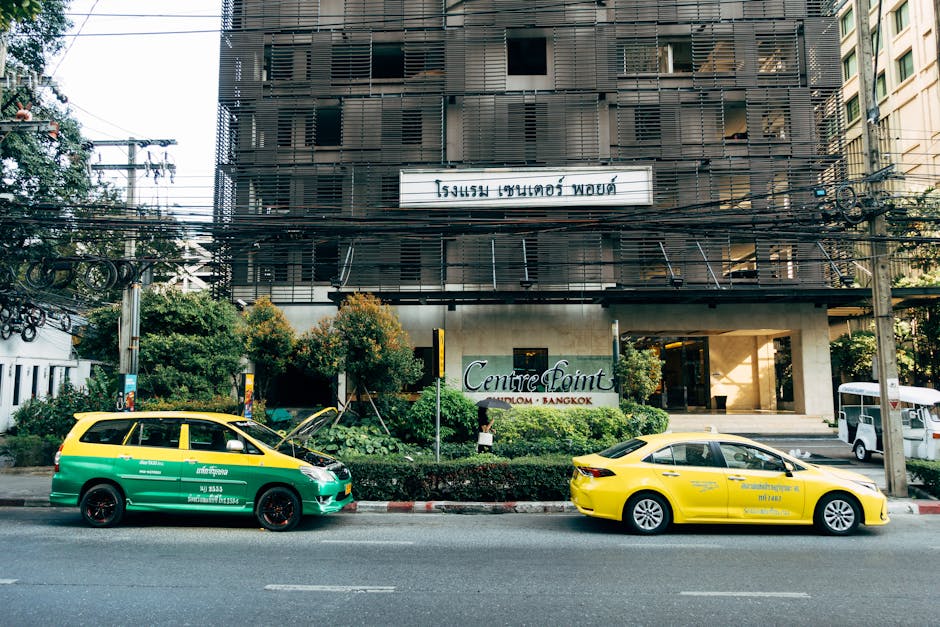
Taxis are the “I just want to get there” option—especially when it’s late, raining, or you’ve got heavy bags.
Metered taxi reality (and how to avoid the hassle)
In Bangkok, taxis are common, and a lot of them are very straightforward. Still, a little common sense goes a long way.
My practical habits:
- Ask for the meter to be used (and make sure it’s actually running).
- Tell the driver your destination clearly (hotel name + nearby intersection helps).
- If you’re asked about tolls/expressways, decide quickly and keep it simple—traffic often turns the “cheap route” into the long one.
If you’re worried about being overcharged, you’re not alone. The biggest savings here isn’t bargaining—it’s choosing the right transport for the conditions.
How long it usually takes (based on arrival time)
Time isn’t only about distance; it’s about timing.
Typical taxi/rideshare “vibes” you can expect:
- Rush hour (roughly morning and early evening): plan for a lot more time than you think.
- Midday: often smoother, and the drive can feel surprisingly manageable.
- Late night/early morning: queues may be shorter, and roads can be quieter—but double-check what’s open in your area when you arrive.
I won’t promise exact minutes because traffic swings hard in Bangkok. But as a rule of thumb, a taxi can be quick when roads cooperate—and frustrating when they don’t.
Best for late nights, early mornings, and bulky bags
If you’ve got checked luggage and you don’t want to drag it through stations, taxis make a lot of sense.
Taxi is especially handy when:
- You land late and want fewer moving parts
- You’re arriving with family members who don’t want to deal with transfers
- You’ve got more bags than your arms can comfortably carry
Trade-off to accept:
- In heavy traffic, the taxi can be expensive in time even if the fare is reasonable.
Pre-booked transfers: the least stressful option for tight schedules
Pre-booked cars are about removing uncertainty: you pay more, but you reduce the chance of a “we’re wandering around at 11pm” situation.
What you’re paying for
When a transfer is done well, you’re buying:
- A driver who’s expecting you (so you’re not guessing at pickup points)
- Luggage handling help (especially useful with multiple suitcases)
- Fewer decisions on your arrival day
This becomes more valuable the moment you land:
- After a long flight
- When it’s raining
- When you’re traveling with kids
- When your hotel is a little complicated to find quickly
When a fixed-price car beats guessing
A pre-booked transfer is usually worth it if your arrival timing is awkward.
Go for it when:
- You land late at night or very early in the morning
- You’re arriving during peak traffic and you’d rather pay than gamble
- You have bulky luggage (or you’re traveling as a group)
Also: if you land and you’re already behind schedule (delayed flight, missed connection), the calmer logistics can be worth the extra cost.
A quick note about pickups and receipts
Do this before you land so you don’t stress later:
- Save your pickup details in your phone offline.
- Take a screenshot of your driver/car info.
- Keep an eye on flight number/name matching if your plan includes meet-and-greet.
If you want a simple “set it and forget it” approach for a car with a clear pickup process, I’ve used GetTransfer once or twice when my arrival timing wasn’t friendly—and it genuinely reduced the hassle.
Sukhumvit drop-off: where you’ll actually end up
Sukhumvit is long, and “on Sukhumvit Road” can mean anywhere from a ten-minute stroll from the train to a walk that feels endless in Bangkok heat.
Six popular bases on Sukhumvit
Here are the areas I see most travellers staying around. They’re not just names on a map—they change how annoying your last steps feel.
- Asok
- Nana
- Phrom Phong
- Thong Lo
- Ekkamai
- On Nut
What to expect after the ride (the 5–20 minute reality)
Even after you get the “big” transfer right, you still have a last-mile piece. In Sukhumvit this usually comes down to:
- Walking from the drop-off to your hotel
- A short BTS/MRT hop (if your hotel is near a station)
- A quick local taxi ride if your hotel is tucked away
My advice: before you leave the airport, check two things on Google Maps (or your preferred map app):
- Your hotel’s nearest station name
- The estimated walking time from that station in “real” conditions
If it says 20 minutes but includes lots of stairs and road crossings, consider switching tactics (taxi for the last piece or a different drop-off point).
How to avoid overpaying on the final leg
Bangkok is full of short rides that can add up.
To keep it sensible:
- If you’re already at a BTS/MRT station, use the rail for the last hop instead of a second taxi ride.
- If you’re staying near Asok/Nana (very transit-friendly), rail + walk is often smooth.
- If you’re farther out with heavy luggage, it’s usually better to take a car all the way close to your hotel.
So, what should you do? My picks by scenario
This is the part you actually wanted: which option fits your arrival.
If you land during rush hour with hand luggage
You want something efficient but not exhausting.
My go-to approach:
- Choose airport rail if you’re comfortable with transfers and you can travel with one manageable bag each.
- Choose a taxi if you hate crowded stations or you’re arriving with more than you can comfortably carry.
Quick decision rule:
- If you can handle stairs calmly → rail.
- If you’ll be annoyed the second you step off the plane → taxi.
If you land late with checked bags
This is where pre-booked transfers or taxis shine.
Here’s what I’d prioritize:
- Pre-booked transfer if you want the calmest arrival and a driver who’s waiting.
- Taxi if you’d rather use local options, but you don’t want to deal with station transfers.
The big thing late night arrivals need:
- Fewer steps.
- Clear pickup.
- Less time standing around.
If you’re traveling as a group
Group travel is where “cheap” can become “annoying.”
If you’re a couple with two medium suitcases or a small group:
- A taxi or transfer often wins because everyone moves together.
- Rail can still work, but it usually means more planning and more waiting for each person’s turn with luggage.
My practical group tip:
- Don’t over-optimise the route—optimise the experience you’ll still be enjoying when you’re tired.
Final thoughts
Bangkok-to-Sukhumvit transport isn’t one-size-fits-all. The rail is great value and often very efficient, but taxis and pre-booked cars are the “easy button” when luggage is heavy or your arrival timing is awkward.
If you tell me (1) which airport you’re flying into and (2) what time you land, I can point you toward the option that usually feels best that day—without overcomplicating it.