I’ve rented cars in Dubai a bunch of times, and the surprises rarely show up at the desk—they show up later. Below is what to watch for with Salik tolls, speed-camera fines, deposit holds, and how to drive as a visitor.
The Late-Posting Stuff: Salik and toll surprises
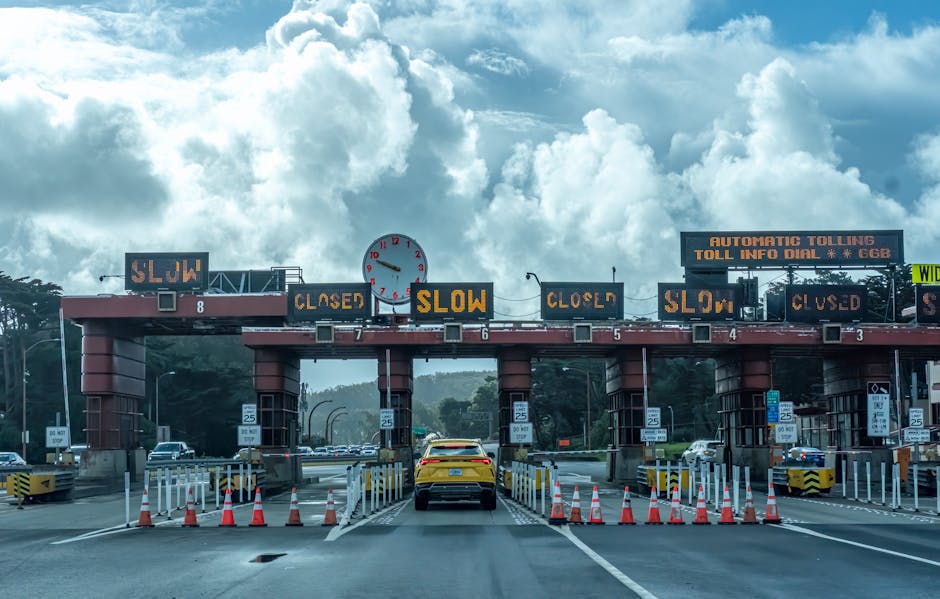
If you only remember one thing about Dubai tolls, remember this: a lot of them don’t get “processed” the moment you drive through.
Salik is plate-based, so the charge may arrive after your return
Salik is billed using your vehicle’s number plate, not a “coin in a machine” moment you can control. That means you can hand the car back feeling totally fine… and then find an invoice (or an extra charge) weeks later.
What’s useful to know (and what the rental desk often under-explains):
- Your responsibility is tied to the trip, not the checkout moment. You can’t argue the toll away with “it happened after we paid.”
- The rental company may handle the tolling admin. They might pay/confirm later and then charge you.
- Timing matters. Expect anything to surface after your rental ends, especially if their billing cycle is slow.
Fees can be bundled with admin, not just the toll
Even if the toll itself is straightforward, the “surprise” often comes from how it’s billed.
Common pattern:
- Toll events occur during your drive.
- Rental company processes them later.
- You get an invoice line like “toll charges” plus an admin fee or handling fee.
When you ask questions at the desk, try this exact approach:
- “Will Salik be charged as toll-only, or will there be an additional handling/admin fee?”
- “If I’m billed weeks later, will it come as a pending hold or a final charge?”
How to reduce Salik hits (without turning your trip into a spreadsheet)
I’m not saying “avoid tolls forever”—Dubai is designed for fast corridors.
Instead, aim for “less stress, fewer surprises”:
- Use GPS that shows tolls (or at least indicates major toll routes).
- Plan your day routes so you aren’t making random darting changes late at night.
- Drive the main road, not the argument. Trying to dodge toll points can sometimes cost you more time (and fuel) than it saves.
If you want the practical takeaway: assume you’ll see some toll activity if you drive beyond one or two areas.
Quick sanity check list before you sign anything
At pickup, you want to know what happens if Salik happens.
Ask the desk:
- “What exactly will you charge me for Salik?”
- “When do I see it—immediately, on the final bill, or as a later email/invoice?”
- “Do you use a separate Salik account/tag, or is it just plate-based billing?”
Speed Cameras: Why a “clean” return can still cost you

Dubai has a lot of cameras. And the problem with cameras isn’t the ticket itself—it’s that the rental company often becomes the middleman.
Camera fines can arrive weeks later through the rental company
Here’s the typical chain of events:
- You get caught by a speed or red-light camera.
- The camera system records the plate number.
- The rental company identifies the driver based on rental records.
- You may get billed later, sometimes after you’ve already gone home.
That late timing is why this topic feels like a “gotcha,” even when it’s not.
Speed-camera rules you should treat like “always on”
You don’t have to drive like a robot, but you do have to respect cameras.
- Follow the posted limit, not the “everybody seems to be doing X” speed.
- Watch for camera zones after merges and exits. Speed changes happen fast in Dubai.
- Keep a buffer around radar-trapping behavior (e.g., accelerating hard right as you enter a stretch).
I’ll be honest: Dubai traffic can make it feel natural to speed a bit. Cameras remove the fun from that.
Red-light cameras aren’t always obvious while you’re driving
Red-light enforcement can be triggered in ways that feel inconsistent if you’re used to other countries.
Do this instead:
- Don’t creep forward on yellow unless you’re confident you can clear safely.
- Keep your turning plans simple. If you’re turning across lanes, commit early and don’t “hesitate-then-jump.”
- If you’re uncertain, wait a cycle. It’s cheaper than a ticket.
What to ask at the desk (so you can plan financially)
If you want to protect yourself, ask about fines in plain language.
- “If I get a camera fine, will you pass it to me at cost?”
- “Do you add a processing fee for fines?”
- “How do you notify me—email, SMS, or a final invoice?”
Also check your rental agreement for wording around:
- “administration of fines”
- “handling charges”
- “speed enforcement”
- “camera violations”
Deposits, Pre-Auth Holds, and the money you won’t have

This is the one that really messes with travelers: the charge you see isn’t the charge you pay, and the bank timing can be confusing.
The deposit hold can tie up your card longer than you expect
Most car rentals ask for a deposit. Even if you don’t lose money on paper, you can still lose spending power.
What’s common:
- Your card gets a pre-authorisation hold.
- The amount is “reserved” and not usable.
- The hold is released later after return and processing.
Why it feels unfair: you return the car, and your bank might keep the hold for days.
Pre-auth isn’t a charge—until it is
Some deposits are truly “holds” that drop off automatically. Others can become an actual charge if the rental company claims damage, excess cleaning, fuel disputes, or unpaid charges.
How to avoid turning a hold into a headache:
- Inspect thoroughly before driving out.
- Photograph everything (more on that below).
- Keep receipts for fuel top-ups and any toll/fine-related paperwork.
Ask how the deposit is handled when you return
Good desk questions that prevent confusion:
- “Is this a deposit hold or an actual charge?”
- “When do you release the authorisation after the car is checked in?”
- “Will you notify me when it’s released, or does it automatically drop with my bank?”
If you’re paying with a card with lower limits, it’s worth moving money around before you arrive.
Fuel disputes: where deposits can get “converted”
Even if you fill up the tank, disputes can happen around:
- Fuel gauge readings at pickup vs return
- “Same fuel level” expectations
- Top-up receipts that don’t match the recorded amount
To keep it clean:
- Take a photo of the odometer and fuel gauge at pickup.
- Take the same photos at return.
- Use a fuel station receipt and keep it until you’re sure nothing else comes.
Insurance, Damage Reporting, and the fine print
The rental desk will tell you what’s included. What they won’t always do is explain how claims work in real life.
The insurance you get might not cover what you assume
Look for gaps in coverage like:
- Windshield and tyres exclusions
- Coverage that reduces your liability but doesn’t remove it
- Excess/deductible amounts you’d still pay
What to do:
- Ask for the exact excess amount you’d be responsible for.
- Ask whether minor damage triggers a claim or is handled via “pay now / pay later” processing.
Photograph like you’re building a case file
This sounds dramatic, but it’s practical.
Do it like this:
- Before you leave the lot: wide shots (all sides) + close-ups of any existing scuffs.
- After check-in: wide shot + close-up of the same areas.
- Inside the car: steering wheel, dashboard corners, and seat condition.
If anything is disputed, your photos are the only thing you truly control.
Get the damage report in writing, not just “the guy said so”
Some rental desks are friendly and fast. But verbal confirmations disappear.
Make sure you get:
- A written inspection report
- A copy sent to your email (if they offer it)
- A reference number or rental record that includes the condition report
Don’t ignore small paperwork moments
These are boring, but they matter:
- Confirm the fuel policy (full-to-full is often easier to manage)
- Confirm the mileage/usage rules
- Confirm where the car must be returned (airport vs city office can change the process)
If you want fewer surprises, book the terms clearly
If you’re trying to reduce “desk roulette,” I’ve found that arranging terms in advance helps—especially around what’s included and what isn’t. When I want the paperwork to line up before I arrive, I sometimes use QEEQ as a practical way to check the rental terms ahead of time.
Dubai Driving as a Visitor: lanes, rules, and sanity-saving habits
Dubai isn’t hard to drive in—until you’re overwhelmed by traffic complexity, signage speed, and the sheer scale of the roads.
The first rule: give yourself room to slow down
Dubai roads often feel like they’re designed for smooth flow. But other drivers can change lanes quickly, and turning setups can be longer than they look.
Try these habits:
- Don’t tailgate, especially near exits.
- Signal early and commit—late lane changes are what start the stressful moments.
- Use GPS calmly, but don’t follow it blindly through confusing intersections.
Parking is where visitors accidentally rack up problems
Parking is not just “find a spot and stop.” There are rules, zones, and enforcement.
Look out for:
- Pay-and-display style zones
- No-parking markings that can be easy to miss at speed
- The difference between “allowed to stop” and “allowed to park”
If you’re not sure, park once you’re in an area you understand—not in the middle of a busy corridor.
Lane discipline matters more than you think
Dubai driving is often “polite but assertive.” That means:
- There’s usually a “fast lane culture,” so don’t camp.
- There’s also a pattern of quick merges, so watch mirrors and blind spots.
- Roundabouts and multi-lane junctions can look similar—scan for overhead signs.
Driving at night: the roads are pretty, but your cues are different
Night driving can make you feel more confident because highways are brighter.
But your cues change:
- Reflections can hide road markings.
- Flashing brakes may feel more sudden.
- Pedestrians and cyclists are harder to spot than you expect.
Go slower than you think you need to, especially your first night.
Where you’ll probably go (and how to avoid turning it into a toll-and-ticket sprint)
When you’re hiring a car in Dubai, most visitors naturally cluster around a handful of big destinations.
Here are 7 places you’ll likely drive to—use them as a “day plan” anchor so you’re not zig-zagging across the city:
- Dubai Mall (Downtown)
- Burj Khalifa area (Downtown)
- Dubai Marina
- JBR Beach
- Palm Jumeirah
- Jumeirah Beach
- Al Seef
If your plan stays within one cluster, you usually get fewer toll surprises and fewer “I took the wrong exit” moments.
Your “Return the Car” checklist (so nothing follows you home)
This is the part that most people rush. Don’t.
Before you hand the keys over, do a final condition check
Bring your phone out and do the same thing you did on pickup.
- Confirm there’s no new visible damage
- Take wide + close-up photos
- Note the odometer
- Take a photo of the fuel gauge
If the car looks the same as when you left, your risk drops dramatically.
Get a return receipt and keep proof of return
Ask for:
- A return confirmation
- A receipt/email showing the car was returned and the rental closed
This helps if a charge appears later.
Turn in your paperwork like a detective
Keep a folder (on your phone is fine) with:
- Pickup condition photos
- Return condition photos
- Fuel receipt(s)
- Any correspondence about tolls or violations
If you get an invoice weeks later, you’ll be able to respond faster.
If you’re billed later, respond quickly and calmly
Don’t panic, but do act.
When you get a message about tolls or fines:
- Ask for a breakdown of what’s being charged
- Confirm dates and times (so you can match it to your routes)
- Check whether fees include admin/processing charges
If you’re disputing something, evidence is everything.
Final Thoughts
Hiring a car in Dubai can be brilliant—flexible, comfortable, and way easier than trying to stitch together taxis and the metro when your days get busy. But the reality is that some of the most common problems aren’t solved at the rental desk; they show up later as Salik toll bills, camera fines, or deposit timing.
If you do three things, you’ll be in great shape:
- Ask how tolls and fines get billed (and whether there’s a processing fee)
- Protect yourself with photos and a written damage report
- Keep receipts and confirm return with documentation
Do that, and your Dubai driving experience stays fun for the full trip—not just until you land back home.


