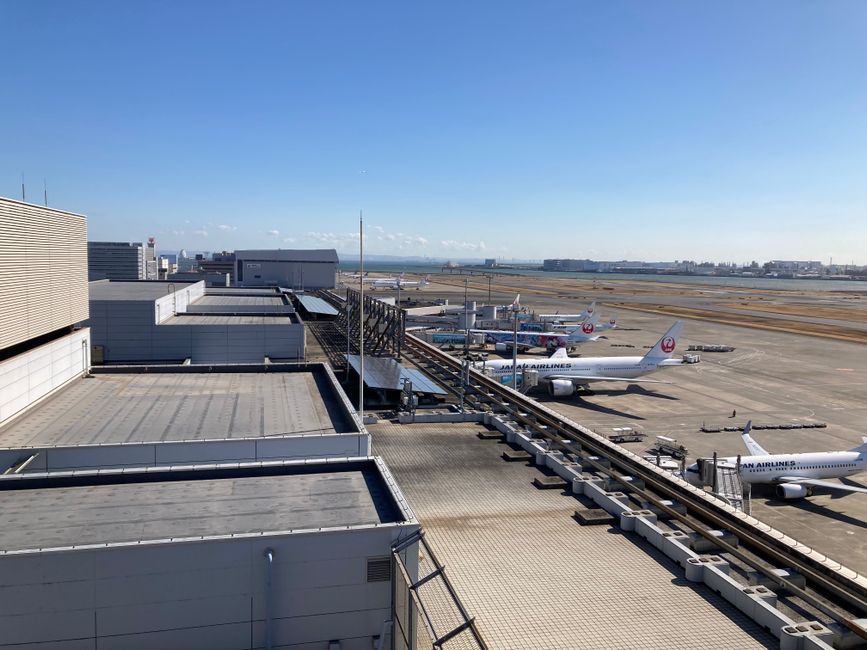
Landing at Tokyo Haneda Airport and heading to Shibuya? I’ll show you the fastest practical routes (train, taxi, and private transfer) and exactly how to avoid the most common platform/exits mix-ups.
If you’re in a rush: trains are usually quickest in normal hours, but after midnight the taxi/private transfer option often wins because you’re not fighting the last departures.
The quickest route (and what to choose)
Before you pick anything, you just need three bits of info: how late it is, which terminal you’re arriving at, and whether you’ve got luggage that makes transfers annoying.
Typical travel times & rough costs
Expect these as ballparks (they swing with traffic, waiting time, and the exact train connection):
- Train (via JR connections): ~25–55 minutes, usually the cheapest. Roughly ¥700–¥1,800.
- Taxi: ~35–90 minutes depending on traffic. Roughly ¥8,000–¥20,000+.
- Private transfer: ~40–90 minutes, similar traffic reality to taxis, but you’re paying for door-to-door convenience. Often more than a taxi.
- Airport bus: ~50–100 minutes (can be slower than trains), price varies, and schedules tighten overnight.
Fastest late at night: taxi vs private transfer
After midnight, the “fastest” option is usually whichever doesn’t depend on you catching a specific last train or bus.
- Taxi (most reliably fast late night): Door-to-door, no transfer anxiety, and you’re not stuck waiting for the next service.
- Private transfer (close second): Similar time to taxi, but the pickup tends to be smoother if you don’t want to navigate.
- Train: Still doable sometimes, but you’ll be working around reduced frequency and last-call timing.
If you’re landing late and you care about minimizing stress more than saving a few yen, I’d go taxi/private transfer.
Which terminal are you starting from?
Haneda is split across Terminal 1 and Terminal 2, and that affects which corridors/stations feel “closest.”
Quick rule of thumb:
- Look for signs for your terminal’s train access (not just “station”).
- If you’re not sure, follow the airport signs to Keikyu (for certain routes) or Tokyo Monorail (for certain routes).
- If you’re arriving from an international flight, you’ll often be directed toward immigration/baggage and then toward your terminal’s transport links—so don’t assume the “same station” is the same door.
Option 1: Train—reliable, usually the cheapest
Trains are my default pick when it’s not too late and I’m not carrying more luggage than a small suitcase.
The big win: trains are predictable, and you can ride straight into the part of Tokyo that’s built around rail.
Route A: Keikyu + JR (common, often simple)
This route generally works well if you’re aiming to connect into the JR lines serving Shibuya.
Typical flow:
- Get to Keikyu access from Haneda.
- Take the Keikyu line toward a major connection point (often Shinagawa, depending on the service pattern).
- Transfer onto JR toward Shibuya.
Why you might choose this:
- Often a smooth connection via a major JR hub.
- Good balance of time and simplicity.
Trade-offs:
- Transfer stations can feel like a maze with luggage.
- Peak hours can be packed—plan for shoulder-to-shoulder commutes.
Route B: Tokyo Monorail + JR (good for Hamamatsucho connections)
If you prefer a more “straight-forward” rail segment, the Tokyo Monorail is a popular way in.
Typical flow:
- Take the Tokyo Monorail from Haneda.
- Ride toward Hamamatsucho area.
- Connect to JR services that bring you to Shibuya.
Why you might choose this:
- A single rail ride can reduce transfer complexity.
- Sometimes the walking/transfer patterns feel less chaotic.
Trade-offs:
- Depending on where you connect, you may still have a transfer.
- You’ll still need to navigate within JR areas once you arrive.
Transfers that feel confusing (but aren’t)
The biggest “train problem” from Haneda to Shibuya isn’t the train—it’s the station signage and which line you’re actually boarding.
To keep it easy:
- Use Google Maps (or whatever routing app you like) and don’t trust memory.
- When you see “Shibuya” on the platform screens, double-check the line name (JR vs other operators).
- If you’ve got luggage: stand where there’s more space (car ends / less dense spots) rather than trying to “micro-optimize” your walk.
Option 2: Taxi—best when you’re tired or it’s late
A taxi from Haneda to Shibuya is the “I just want to arrive” option.
It’s not the cheapest, but it’s often the most pleasant—especially after a long flight.
How long it usually takes
Realistically, your time estimate depends on traffic.
- In lighter traffic: you might be closer to the ~35–60 minute end.
- During busy times: it can stretch well past an hour.
My practical advice: if your flight lands late and you’re counting on smooth timing, don’t assume taxi = “always quick.” Taxi is “often faster than waiting for a perfect connection,” not “always 30 minutes.”
Fare reality check
Taxi fares vary by:
- traffic and route choice
- whether you’re going at peak congestion
- luggage (not usually priced separately, but your car choice might be)
Expect something in the neighborhood of ¥8,000–¥20,000+. If you’re splitting costs with others, it suddenly becomes much more reasonable.
Taxis for groups & luggage
If you’re traveling with:
- more than 2–3 people
- bigger suitcases
- sports gear / strollers
…taxi (or a larger vehicle option) is often less hassle than juggling transfers. You’re also not forced into specific station corridors.
If you’re unsure what to request, just tell yourself this: the driver can handle the “best car,” you just need the destination and terminal/area clarity.
Option 3: Private transfer—door to door without decisions
Private transfer is the option for people who don’t want to think about train lines, station hallways, or “am I at the right terminal gate?”
When it’s worth paying extra
I’d consider private transfer if:
- you’re arriving late at night
- you’ve got heavy luggage or multiple bags
- you’re traveling with kids (less switching = less meltdown)
- you want the simplest possible start to a trip
How pickup usually works (and what to tell the driver)
Private transfers typically want:
- your arrival terminal (1 or 2)
- flight details (so they can track delays)
- your exact drop-off area in Shibuya (hotel address helps)
Do this before you land:
- screenshot your booking confirmation
- save the terminal info in your notes
- have your hotel address copied in Japanese if possible (or at least the address line)
A quick note on fixed-price services
When I don’t want to gamble with navigation after a flight, I’ve used GetTransfer once or twice for a fixed-price pickup—it’s one of those “pay for peace of mind” moves.
Option 4: Airport bus—nice in daytime, tricky at night
The airport bus can be a great option if you want fewer transfers and don’t mind a slower journey.
But schedules and traffic matter more here than with trains.
What to expect
Buses are usually:
- simple: get on, ride, get off near your area
- often less frequent than rail
- slower when roads are congested
If you’re traveling with lots of luggage, buses can be easier because you’re not carrying it through multiple station corridors.
Which bus stop near Shibuya
Shibuya is large, so “Shibuya” can mean different drop points.
When choosing your bus, check:
- the exact destination stop name (not just “Shibuya”)
- how long the walk to your hotel is afterward
A little upfront checking can save you from a 15-minute walk you didn’t plan for.
Night service caveat
At night, bus frequency can drop and schedules can vary by season/day.
If you’re landing late, treat the bus as:
- a daytime-friendly option
- a “check the live timetable right now” option for late arrivals
If you miss the last bus, you’re back to taxi-land anyway—so don’t build your whole plan on “it’ll probably run.”
Avoid platform and exit confusion at Haneda & Shibuya
This is the part that usually causes the “why did I waste 30 minutes?” moment.
The good news: with a simple checklist, it’s very manageable.
Haneda signage: Terminal 1 vs 2
Haneda’s biggest “gotcha” is that you can accidentally walk into the wrong rail access point.
Before you commit to a hallway:
- confirm your terminal number (1 or 2)
- follow signs for the specific operator: Keikyu or Tokyo Monorail
- watch for whether the sign is guiding you to a station entrance vs just an airport walkway
If you’re stressed: stop, check one time, then move. A 30-second pause is better than 10 minutes of wrong turns.
Shibuya station exits for the places you’ll actually go
Shibuya station is a “many streets, many exits” situation.
To avoid wandering after you arrive:
- pick your hotel/meeting point’s likely area (Scramble / Hachikō / Shibuya Scramble Square / Miyashita Park)
- check which exit that area commonly connects to
- save the exit name in your phone so you’re not relying on memory while tired
One practical trick: when you route in Google Maps, it often suggests which exit to use. Treat that as your north star.
My on-the-ground checklist
Here’s what I do to prevent platform confusion:
- Turn on location services before you enter the rail area.
- Screenshot the route summary (especially transfers).
- Once at the station, scan the platform screens for your destination and line name, not just the word “Shibuya.”
- If a platform looks wrong, don’t panic—just backtrack to the sign that tells you which line you need.
- When using stations with multiple lines, give yourself an extra 5–10 minutes buffer for the first time.
Final thoughts: pick the simplest option for your arrival time
If you’re traveling light and it’s not super late, train is usually the smartest move—cheaper, consistent, and fast enough that you’ll actually enjoy getting there.
If you’re landing late, jet-lagged, or carrying more bags than you want to think about, taxi or private transfer is often the most efficient choice overall because it avoids last-departure games.
Quick recap (what I’d do)
- Daytime / early evening: Train for value and reliability.
- After midnight: Taxi or private transfer for the smoothest arrival.
- If you hate transfers: Taxi/private transfer beats navigating station connections.
- If you’re budget-minded but flexible: Train still can work late, just double-check live schedules.
One last trick
Before you leave the airport area, check your route one last time in your maps app and confirm the arrival station name and which exit area you need in Shibuya. That tiny moment of clarity saves you from wandering Tokyo at full jet-lag speed.
Safe travels—and if you tell me your arrival terminal (1 or 2) and roughly what time you land, I can suggest the most sensible option for that specific window.