Hey fellow travelers—if you’re planning to rent a car in Georgia (the country) and head from Tbilisi to Kazbegi, I’ve got you. I’ll walk you through the real-world choices: which vehicle makes sense for the mountain roads, how local driving feels day-to-day, and why the “cheapest” rental is rarely the cheapest in the end.
You’ll also see a simple stop plan for the route (without turning your trip into a checklist race).
Choosing your rental setup for the Georgia trip
Manual vs automatic (and why it matters more than you think)
If you’re coming from left-side driving countries, the road layout can already feel slightly “off” at first. Add mountain turns and stop-start traffic around cities and small towns, and suddenly your comfort matters.
Here’s how I’d choose:
- Automatic: Go for this if you’re even a little unsure. In mountain traffic and during slower climbs, you’ll save mental energy.
- Manual: Totally fine if you’re confident. Manuals can be cheaper and you’ll likely have more vehicle options.
- My rule of thumb: If you plan to drive multiple days, automatic usually becomes worth the extra cost.
4x4 vs AWD vs “a normal car”
For Tbilisi to Kazbegi, you don’t always need a full-time 4x4—but you do need to think about weather and road conditions.
- In spring/summer/early autumn (generally): A regular car can work on the main road, as long as the weather is clear.
- In winter or shoulder season: Consider a 4x4 (or a car clearly equipped for rougher conditions) if the forecast looks iffy.
- What to ask the rental desk: “Is this car okay for mountain roads right now?” and “Will you provide any winter essentials (tires/chains guidelines) if needed?”
A practical mindset: you’re not booking a sports car—you’re booking traction and confidence.
Insurance that’s worth reading (not just buying)
Rental insurance in Georgia can be one of those “sounds simple until you’re holding your phone at the counter” moments.
Before you sign, look for answers to:
- Deductibles: If you damage a tire/wheel, what’s the out-of-pocket amount?
- Coverage specifics: Does it cover glass, tires, undercarriage, and small dents?
- Roadside assistance: If you break down on a mountain stretch, do they actually help, or do you call a number and hope?
- Documents: Make sure you understand what you need to show if there’s an issue (photos, report, etc.).
If you’re trying to compare offers quickly, I used GetRentacar on a route like this once—mainly because it helped me filter vehicle types and read the fine print without bouncing between ten tabs. (But still: always verify the final contract before you leave the lot.)
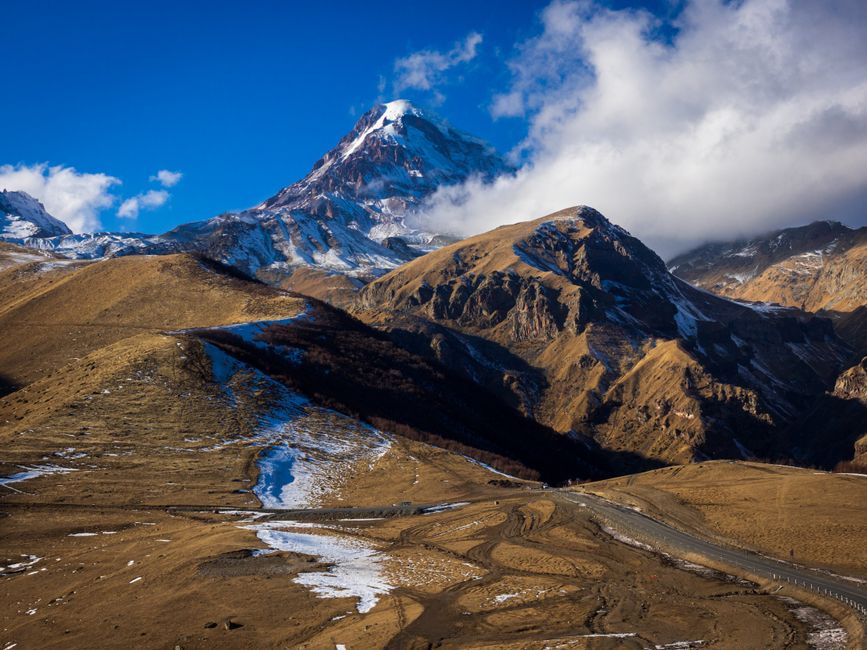
The route: Tbilisi to Kazbegi by the Georgian Military Road
Time and distance reality check
Typical driving time depends on:
- traffic leaving Tbilisi,
- weather (fog/rain can slow everything down),
- how many stops you make,
- and whether you hit road works or delays.
Instead of trying to “win the clock,” plan for flexibility. The road is scenic enough that you’ll want to pull over.
A good approach for a one-day push:
- Leave early (before midday traffic builds up).
- Pick 2–3 stops max if you’re doing a same-day round trip.
- If you’re sleeping in Kazbegi, you can go slower and enjoy the view.
Stop planning without rushing
When I over-plan this route, I usually regret it. You’ll get stuck behind buses, you’ll wait for the “perfect” pull-off that never arrives, and you’ll arrive tired.
So here’s a simple, sane stop list I’d follow:
- Ananuri Fortress — a classic viewpoint stop with historic buildings and a great “stretch your legs” break.
- Zhinvali Reservoir — easy to enjoy from the roadside; perfect for photos without losing too much time.
- Gudauri — a mountain hub area where it’s easy to grab snacks and reassess the weather.
- Juta Village — quieter, scenic vibes if you want something calmer than the main resort areas.
- Gergeti Trinity Church — the big “Kazbegi moment,” especially if the clouds aren’t rolling in.
- Stepantsminda (Kazbegi) — base town for the area; this is where you’ll actually feel the trip.
That’s six solid stops. If weather is rough or daylight is short, cut it down—no shame.
What to expect at pull-offs and viewpoints
Georgia is friendly, but mountain roads mean:
- pull-offs can be unofficial (small parking spots by the roadside),
- some areas may be busy in peak season,
- and GPS can sometimes mislead you into a tight spot.
My advice:
- park where there’s space to turn around without reversing too much,
- take a quick look first—don’t trust that “it’ll fit” instinct,
- and keep valuables out of sight.
Mountain roads and local driving habits
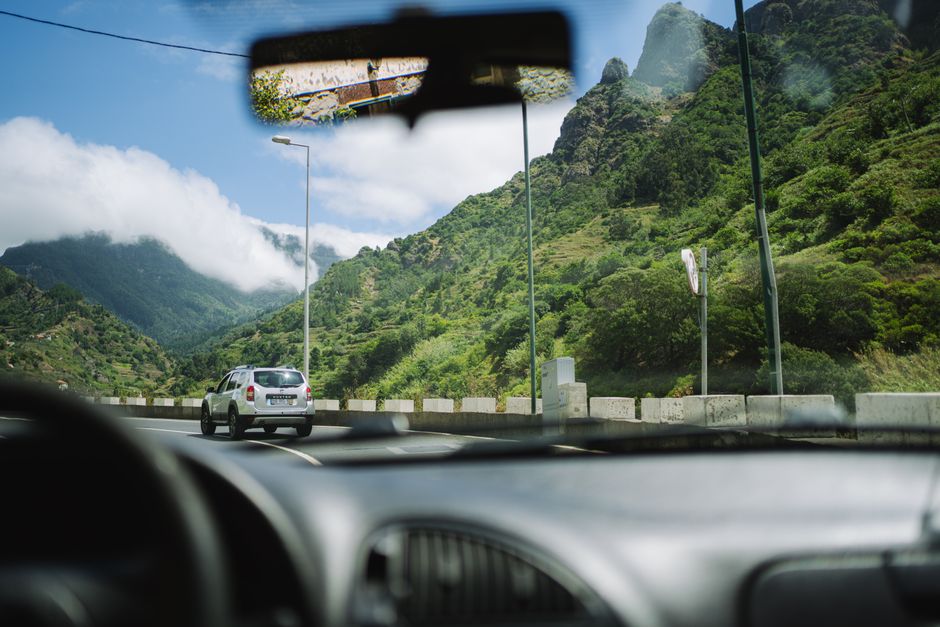
I’m going to keep this practical. You’re not trying to become local; you’re trying to survive confidently.
How overtaking feels on narrow roads
On mountain stretches, overtaking usually happens where visibility is “just enough,” and drivers may expect you to keep your line steady.
What I do:
- Drive predictably: hold your lane, signal early, and don’t drift toward the center line.
- Avoid last-second moves: if you see a vehicle behind you closing fast, don’t freeze—maintain speed where safe and let them pass at a clear moment.
- Assume motorcycles are “in addition to everything”: they can appear quickly around bends.
You’ll still have moments where people pass you in ways that feel bold. The key is not panicking—stay smooth.
Speed, junctions, and hairpins
Hairpins are where confidence is either built… or broken.
Use this simple method:
- Slow in the approach, not in the turn.
- Brake early before the bend (especially if the road is wet).
- Keep a little buffer from the vehicle ahead so you have time to react.
At junctions and side roads:
- be ready for cars that pull out without a lot of drama,
- but also don’t assume “they saw you” just because you’re in a more obvious position.
Parking, fuel, and “small surprises”
Driving in Georgia tends to be straightforward for most of the trip—until you hit the little stuff.
Common small surprises:
- Parking lots can be messy: people may park tightly or leave little room for cars to pass.
- Fuel stops can be unpredictable: don’t run low just because the gauge looks “fine.”
- Roadside help may not be instant: if you scrape a curb or get a flat, you might need to be more self-sufficient (or patient).
My checklist for not getting annoyed:
- Fill up when you’re at roughly half tank in rural areas.
- Keep cash if possible (some places are still cash-friendly, even if cards exist).
- Take photos of the car at pickup and return.
Why the cheapest agency is rarely the cheapest
This is the big one. “Cheapest” can mean the price is low because your costs shift to you later.
Deposit holds and payment traps
Here’s what to watch for:
- Large deposits: sometimes you’ll pay a deposit that gets tied up on your card for days.
- Different payment conditions: “cash discount” or “card surcharge” can change the real final price.
- Hidden fees: things like admin fees or “service charges” that weren’t obvious in the initial quote.
What you can do right now:
- Ask the rental desk to tell you the final total before you pay.
- Ask whether deposit is refundable immediately or after paperwork processing.
Mileage limits, late returns, and “smooth” fees
Some rentals look cheap because they’re built around the idea you’ll:
- drive a limited amount,
- return on time,
- and keep the car in near-perfect condition.
Read for these:
- Mileage caps: confirm if it’s unlimited or limited per day.
- Late return: how much per hour (or per day) is it?
- Cleaning charges: what counts as “excessive dirt”? Mud from a mountain stop can get you billed.
For a Tbilisi-to-Kazbegi day, that’s extra important because:
- you’ll likely make more stops than you think,
- weather delays can push your schedule,
- and pulling over can lead to dust in the car.
Fuel policy: the silent price difference
Fuel policy is where many travelers get “surprised.”
Common policies you might see:
- Full-to-full: best-case scenario for transparency.
- Pre-purchase fuel: you pay in advance and may not be able to refuel exactly the way you need.
- Return with any level + a high per-liter “service” rate: this is often the worst deal.
Do this:
- confirm the fuel policy in writing or on the contract,
- plan to return with a similar fuel level (if possible),
- and keep receipts if you refuel.
A practical game plan for a smooth day
This is how I’d run the trip if I wanted it easy and safe, not just fast.
Morning checklist before you hit the mountain road
Before you leave Tbilisi (or wherever you pick up), do this quick round:
- Car condition: photos of tires, lights, mirrors, and any existing scratches.
- Fuel level: confirm what the contract expects.
- Wipers/lights: test quickly (mountain weather can shift fast).
- Phone mount + offline map: you don’t want to lose navigation on a bend.
- Water + something to snack on: delays happen.
Then, once you’re moving:
- take it slow for the first 20–30 minutes,
- let the “new driving rhythm” settle in.
When weather turns (because it can)
If clouds roll in and visibility drops, your plan needs to be flexible.
A calm decision tree:
- Low visibility + slippery road feel: reduce speed, keep bigger gaps, and be ready to cut stops.
- If you can’t clearly see the viewpoint: don’t try to “push through” for the shot.
- If you’re uncomfortable: it’s not a failure to turn around or delay.
Mountain driving isn’t about proving toughness. It’s about getting everyone home safe.
When to skip the “must-see” (and still enjoy the trip)
You can still have an incredible day even if a specific photo spot isn’t cooperating.
Consider skipping or delaying if:
- the road is congested at a viewpoint,
- locals are avoiding a certain turn/area (watch for subtle signals),
- or you’re low on daylight.
A smart pivot:
- stay in Stepantsminda longer and explore at a slower pace,
- enjoy the town vibes instead of chasing one perfect scene,
- and come back another day if the weather clears.
It sounds boring, but it’s actually the difference between a trip you remember fondly and one you rush through.
Final thoughts
Renting a car in Georgia—especially for the Tbilisi to Kazbegi run—can be one of those “I’m so glad we did this” decisions. But the real win comes from being practical: choose a car that fits the season, drive predictably on mountain bends, and don’t treat “cheapest” as automatically best.
If you want, tell me what month you’re going and whether you’re aiming for a same-day round trip or an overnight—and I’ll help you tune the vehicle choice and stop plan to match your timing.


