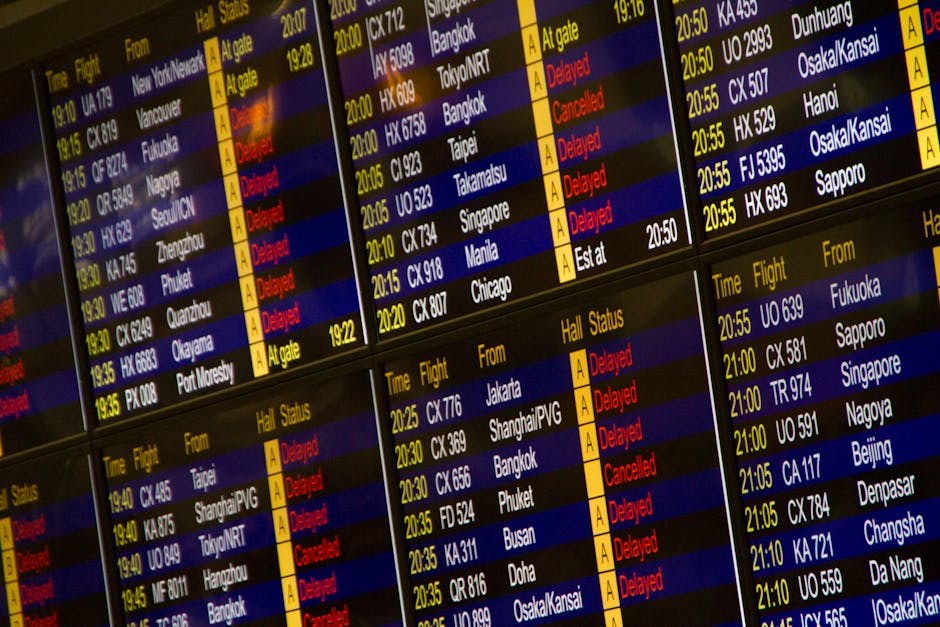
Ever had that moment when you’re sprinting through an airport thinking, “Surely my travel insurance will cover this”? Then you read the policy wording and realise it’s not “any delay” at all.
In this guide, I’ll walk you through the payout triggers for delayed flights and missed connections, then give you smart coverage angles to prioritise when you’re comparing EU vs US coverage basics.
EU vs US: why the rules feel different
EU passenger rights lens (airlines first)
In Europe, your first line of help is usually the airline’s responsibilities under rules like EC 261/2004. Insurance can top things up, but those rights can also determine what’s already being paid.
What tends to matter for delays:
- Right to care (meals, hotel when needed, refreshments)
- Re-routing or refund if the delay makes the trip pointless
- Compensation for delays typically over 3 hours (depending on distance and circumstances)
- “Extraordinary circumstances” can limit compensation, even if you still get care
US airline rules lens (insurance often matters more)
In the US, there isn’t the same blanket, standardised “you get cash if the delay is 3+ hours” style of system for most passengers.
Common patterns you’ll run into:
- Refunds under certain fare rules if you cancel or change
- Compensation is often ad-hoc or based on the airline’s contract
- No blanket cash payment for a specific delay threshold like in the EU
Why this matters for “best insurance”: your policy wording has to cover the costs that airline rights don’t automatically cover—meals, accommodation, transport, and rebooking-related expenses—especially when the US system doesn’t hand you a clear cash benefit.
What actually triggers insurance payouts for delay and missed connections

What triggers insurance to pay for delays
Most travel insurance isn’t paying because you were “delayed”. It pays when your specific situation matches the policy’s triggers—and you can prove it.
The big triggers to look for:
- Your trip is covered and the delayed flight is part of your insured itinerary
- The delay reason matches the policy’s “covered causes” (not every delay is covered)
- There’s a waiting period (often something like 6+ or 12+ hours) before the benefit kicks in
- The claim is for costs tied to the delay period (not vague “we suffered” expenses)
- You can back it up with proof: updated itinerary, confirmations, and receipts
Missed connections: what “counts”
Missed connections are where policies get picky. Some treat it like a separate benefit; others fold it into “travel delay” or “trip interruption”.
How insurers commonly define it:
- You missed a scheduled connection on the same itinerary
- The missed connection is caused by the delay/cancellation of the earlier leg
- Rebooking is needed to get back onto your plan (often same travel day)
- Coverage may differ between a “missed connection” benefit and a “trip interruption” benefit
Common exclusions (this is where people lose claims)
A lot of rejected claims come from one of these mismatches.
Common exclusion areas:
- Pre-booked or foreseeable issues (some policies treat these differently)
- Strikes/work stoppages unless the policy lists them as covered causes
- Delays tied to explicitly excluded causes (including certain weather or civil unrest clauses)
Practical tip: don’t just check the headline benefit (“Flight Delay”). Read the section title like “Covered Reasons” or “What Is Not Covered.” That’s where the real truth usually lives.
Coverage angles to prioritise (so you’re not overpaying or under-covered)

Prioritise the delay-expense benefit
If you’re going to prioritise anything, start with the benefit that reimburses the immediate hit to your wallet after the delay.
Look for coverage that covers:
- Meals and snacks while you wait
- Hotel or short-stay accommodation
- Ground transport (to/from hotel, local trains/taxis)
- Phone/internet costs used to contact support or rebook
- Sometimes reasonable “displaced essentials” when you’re stuck and you truly need them
Reality check: limits matter. Some policies will cover these, but only up to a daily amount or only to a “reasonable” standard that can be stingier than you expect.
Prioritise rebooking costs and fare differences
A delay can force you onto new flights. Insurance may cover the difference between “what you paid” and “what you had to pay to move.” But only if the wording is on your side.
The rebooking-related costs to search for:
- Change fees and rebooking fees
- Extra fare you pay to catch a later flight
- Ticketing/seat reservation charges that get added to the new itinerary
- Emergency travel to keep an essential connection (only if your policy explicitly says so)
If your policy treats rebooking costs like a standard “delay expense,” you’re usually better off. If it treats them like “trip interruption only,” you might not be covered until the situation becomes severe.
Watch the limits and structure
Even a good policy can be disappointing if the math doesn’t work.
Three things that trip people up:
- Per-person vs per-trip caps (one traveller’s limit can be smaller than your group expected)
- Sub-limits (hotel caps per night, meal caps per day)
- “Reasonable and customary” wording (helps insurers reduce reimbursements)
How I compare quickly: I ignore the marketing line and focus on (1) waiting period, (2) max payout for delay expenses, (3) whether rebooking fare differences are included, and (4) whether limits are per person or total.
Also, when I’m comparing policy wording fast (especially the delay/missed-connection sections), I sometimes use Ekta just to spot differences between plans without manually digging through every PDF.
How to read EU vs US coverage basics in the fine print

Read the wording that changes payouts
This is the part that makes people feel like they bought “the wrong insurance,” when really they bought “the right product for a different kind of delay.”
Key wording to look for:
- The exact definition of “travel delay” (scheduled departure vs actual arrival)
- The “common carrier” requirement (commercial airline/rail vs private transfers)
- How they treat “two separate tickets” vs “single ticket itinerary”
- Whether they require you to seek airline rebooking first
- Whether they require costs after you have written confirmation of the delay/missed connection
One big EU-vs-US practical difference you’ll notice in policies: insurers selling globally often still run claims based on the same underwriting logic (covered causes, documentation, timelines). So even if EU passenger rights are strong, your insurance still needs to match its own definition.
What documents to save for the claim
If you can’t prove it, you can’t claim it—simple as that.
I always recommend saving:
- The written airline delay/cancellation notice or updated itinerary
- Boarding passes for the legs involved in the delay and the rebooking
- Receipts with dates, amounts, and proof of payment
- A simple timeline you can paste into the claim form (original departure → missed connection → rebooked flight)
Tip from the “been there” department: if the airline can’t email you the documentation immediately, take screenshots of the delay notification and the rebooking details. It’s not as perfect as a formal letter, but it can save a claim when you’re rushing between gates.
Scenario walkthrough: what to expect in real life
Match the scenario to the benefit
Different delays look similar emotionally, but insurance often treats them differently.
Here are the scenarios I see most—and the benefit they usually point toward:
- Short delay, missed connection at the same airport
- Long delay with an overnight layover
- Cancelled first leg on a multi-city ticket
- Separate ticket purchased twice (riskier for missed-connection claims)
In each case, your success usually comes down to two questions:
- Was the reason a covered cause under your policy?
- Are your costs/rebooking expenses in the benefit category (delay vs missed connection vs trip interruption) your plan actually pays?
A quick reality check about “airline compensation vs insurance”
This is worth saying plainly: airline compensation and insurance reimbursements are not always additive.
Depending on the policy (and sometimes the jurisdiction), insurers may:
- Ask you to claim airline rights first (and provide evidence)
- Offset what they pay if you already received certain payments from the airline
- Require the airline’s denial/approval before reimbursing some categories
So the “best insurance” isn’t only the one with the biggest number—it’s the one whose structure matches how your trip is likely to be disrupted.
Final thoughts: how to choose without getting burned
Your fastest checklist for delayed flights and missed connections
If you only have time for a quick scan, focus on these coverage angles:
- Confirm the waiting period and delay definition match how your itinerary is built
- Verify the covered causes list (strikes/weather/civil disruption vary a lot)
- Make sure missed connections on the same itinerary are covered, not just general delays
- Check rebooking coverage (fees and fare differences) and the limits that apply
Don’t forget the boring part—because it’s the part that pays
Delayed-flight coverage isn’t glamorous, but it’s practical: keep documents, save receipts, and write down a timeline while it’s fresh. If you do that, you’re giving yourself the best shot that the “yes” you expected from the policy becomes the “yes” you actually get.
Safe travels—and I hope your next delay (if it happens) is the kind where you’re back in your seat before you start hunting for the fine print.