Hey there travelers—if you’ve ever lost an entire afternoon to transfers and traffic in Istanbul, you’re not alone.
I’ll show you how to move fast around the city using Bosphorus ferries, metro/light rail, and smart neighborhood route choices so you waste less time.
Getting around Istanbul is always a trade-off: sometimes the quickest route is also the prettiest, and sometimes it’s the opposite. The trick is to plan around water crossings and rail corridors first, then fill in the “view” moments without paying for them with an extra hour of backtracking.
Start With the Right Goal: Time Saved vs Scenic Detours
Before you pick a transit app and start tapping pins, decide what “wasting time” actually means for you in Istanbul.
The Istanbul time-killer checklist
I’ve noticed the same patterns on trips—especially when people try to do “a little of everything” in one day:
- Crossing the Bosphorus too many times. Istanbul’s layout is basically two big halves separated by water—every side-swap costs you.
- Relying on taxis as your default. Traffic can be unpredictable, and you’ll often feel like you’re paying to sit.
- Walking long distances “because it looks close on a map.” In Istanbul, streets and waterfronts don’t always line up with the straight-line distances.
- Changing transport modes late in the day. If you’re tired, a single missed connection snowballs into delays.
- Grouping attractions geographically instead of logically. Some “must-sees” are near each other, but the transit path between them might be awful.
Choose your crossing based on direction, not vibes
If your plan includes both European and Asian sides, your time will mostly be decided by this one question: what direction are you traveling, and how often do you need to cross?
A practical way to think about it:
- One main crossing per half-day (morning on one side, afternoon/evening on the other) usually beats crossing repeatedly.
- If your itinerary is mostly European-side attractions, don’t “pop over” to the Asian side for just one stop unless that stop is near a ferry terminal or rail station.
- If you want views, you’ll get them more efficiently by timing a ferry ride as part of your route—rather than treating it like an extra activity.
Use neighborhood “anchors” so you don’t zigzag
To avoid the classic zigzag day, pick a base area (even if you don’t stay there) and structure your movement around it.
Use anchors like:
- Anchor = where you are trying to be “close to” for 2–4 hours at a time.
- Plan a short local loop from that anchor, then move to the next anchor once.
- Save “far outreach” for a single block (a ferry ride + one destination, or one rail line + a small cluster).
Bosphorus Ferries: The Shortcut Everyone Forgets
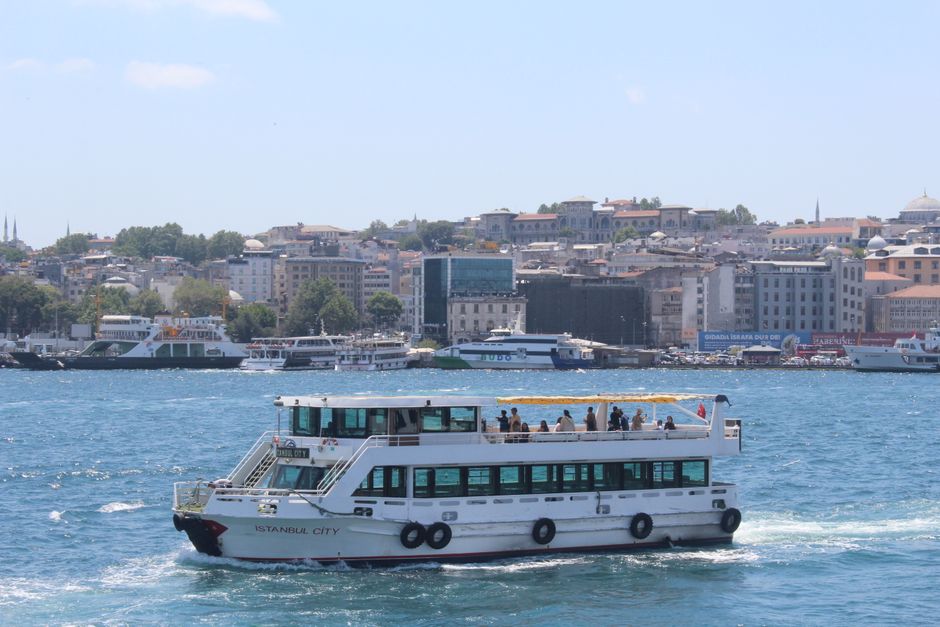
Ferries sound slow until you do the math in real life—especially when roads are backed up. In Istanbul, a ferry crossing is often the most reliable way to beat traffic.
Where ferries actually connect
If you want to avoid wasting time, focus on the main ferry hubs—because they shorten the walk from transit to tourist areas.
Here are the Bosphorus ferry terminals/islands that are most useful for fast planning:
- Eminönü
- Karaköy
- Kabataş
- Beşiktaş
- Üsküdar
- Kadıköy
- Büyükada
- Heybeliada
- Burgazada
- Kınalıada
How to pick the best ferry for your day
You can’t always choose “the perfect” ferry, but you can choose the strategy.
Here’s what I base my pick on:
- Route efficiency: pick the ferry that drops you closest to where you actually want to spend time.
- Water direction: some ferries give better views depending on which side of the vessel you end up on—so decide whether your goal is arrive fast or enjoy the ride.
- Transfer pressure: if you’ll be juggling multiple stops, prioritize simpler transfers over “slightly better” scenery.
- Crowd reality: ferries can get packed near peak arrival/departure windows. If you’re trying to be efficient, aim to board before the “rush crush.”
- Return timing: the fastest plan is the one that doesn’t strand you. Before you commit, check how you’ll get back from your destination.
Tips to get the views without losing time
This is where tourists often overpay with time and effort.
- Don’t wait until the last second to get to the dock. Ferries can feel quick until you factor in queues, ticketing steps, and platform navigation.
- Choose your “view moment” deliberately. If you’re taking the ferry anyway to travel, use that ride as your scenic break—don’t tack on extra viewpoints that require another long detour.
- Stand where you can move. If you’re boxed in, it’s harder to exit quickly when you dock.
- Plan your next step immediately. As you approach your stop, look for the direction you’ll need to walk next—so you don’t wander after arrival.
Metro, Tram, and Light Rail: Lines That Cut Through Traffic
Rail in Istanbul is not perfect, but it’s usually the best bet for predictable movement. The goal isn’t “ride every line”—it’s to use the lines that replace traffic bottlenecks.
The transit system you’ll rely on most (and what to expect)
Rail travel tends to be faster when:
- You’re going long distance within a side (European or Asian) without needing a water crossing.
- You’re traveling at times when roads slow down.
- You want a route that doesn’t depend on traffic mood swings.
Expect these realities:
- Stations can involve stairs and crossings—so factor a few minutes of “movement overhead.”
- Some areas require a short walk after you exit rail—build that into your plan.
- Crowds vary by time of day, and peak hours can be tight.
Tram vs metro: when each wins
A simple way to decide:
- Trams are great for connecting neighborhoods along corridors where walking would be unpleasant but you still want frequent stops.
- Metro/light rail is great when you want to cover distance quickly without bouncing around too much.
For “don’t waste time” planning, I use this rule:
- If you need distance, pick the mode with fewer big connections.
- If you need neighborhood hopping, pick the mode that stops where the action is.
Interchanges that save you from backtracking
Where you lose time is often not the big trip—it’s the transfer step.
To keep transfers efficient:
- Transfer with a clear exit plan. Know which side of the station you need to come out on.
- Avoid “mystery walking.” If you don’t immediately see signs in the direction you want, pause and orient before moving.
- Aim to complete one transfer chain, then walk locally, rather than transferring and re-transferring repeatedly.
- If you’re using an app, double-check the walking segments. Short “walks” in Istanbul can become long ones quickly.
Neighborhood Route Strategy: Sightseeing Without the Detour Tax
Now for the part everyone asks about: how do you choose between Bosphorus views and the fastest routes by neighborhood?
Instead of treating views as a separate activity, I treat them as a “transport layer.” If your route already includes a ferry, your view moment is basically free.
Old City vibes vs efficient movement
If your itinerary clusters in the historic center, you’ll usually spend time walking—so the priority is to avoid unnecessary crossings and transfers.
How to do it efficiently:
- Pick one side of the water per block of the day. Don’t bounce back and forth just to tick boxes.
- Do your “dense sightseeing” in a single walkable chunk. That’s where you’ll lose the least time.
- Use ferry/rail as your “reset button.” When you feel like you’re turning around too much, that’s your cue to switch transit approach.
Trade-off to admit: the most famous spots can be crowded. If you’re time-poor, you may enjoy having two “anchor” areas instead of trying to squeeze everything into one peak-hour sprint.
Beyoğlu/Karaköy energy: where ferries help you behave
This area is popular because it’s lively and compact-ish, but the surrounding streets can be slow.
For getting around without wasting time:
- Use the water connections to relocate efficiently when your plan includes the Asian side.
- Keep your inland walking tight. If you’re planning multiple stops that are separated by big climbs/descents or long streets, rail often wins.
- Plan your “big moments” as route moments. Example: if you want scenery, make it part of your move between halves of the city.
Beşiktaş/European waterfront vs Kadıköy/Asian side
This is where the view-versus-speed question really comes up.
My practical approach:
- If your goal is speed, pick routes that minimize mode changes and avoid multiple back-and-forth transfers.
- If your goal is “Bosphorus views,” do it on a ferry ride that you were going to take anyway. You get the scenery while you’re moving.
- If you want the Asian-side experience, commit to a block there rather than treating it like an out-and-back.
A quick decision framework:
- When you see a plan that requires crossing the Bosphorus twice in one day, ask yourself if you can swap one of those crossings for a local loop.
- When you see views that require a long detour away from your transit corridor, ask if the same vibe exists closer to where you’ll already stop.
When You Need a Bus or Taxi (and how to keep it from wasting hours)
You won’t avoid buses and taxis entirely in Istanbul, and honestly, sometimes you shouldn’t. The point is using them tactically.
Traffic reality: when a taxi is worse than transit
Here’s when I avoid taxis unless it’s a short leg:
- If your route crosses busy bottlenecks (especially around major tourist/commuter hubs).
- If you’re traveling at peak commuting windows.
- If you’re not sure where the traffic will bottleneck (and you don’t have slack time).
- If you’re going somewhere you can reach by rail + a short walk.
And here’s when a taxi can make sense:
- Late evenings when you’re tired and transit frequency is less forgiving.
- Short distances where a walk would be annoying (weather, hills, luggage).
- When you’re going from a rail stop to a specific, nearby address and you know it’s close.
Door-to-door tactics that work
To avoid “taxi time taxes,” I recommend:
- Use a taxi as the connector, not the whole plan. Rail/ferry for the big movement, taxi only for the final mile.
- Set a simple boundary: if the taxi adds you a lot of time compared with transit, don’t stubbornly “stay with it.” Pivot.
- Check your next return route first. The worst time to discover transit inconvenience is when you’re standing outside a venue trying to go home.
Avoid tourist bottlenecks
Without naming specific streets, here’s the pattern:
- Tourist zones often cluster around the same waterfront/landmarks, and the walk-ins can be slow.
- The fastest plans often feel boring on paper because they avoid “fancy detours.”
A better strategy:
- Build a route that moves you along transit corridors.
- Leave longer wandering for one block of the day, not every block.
Your Day-Plan Template: Build a Route That Stays on Track
If you want to stop overthinking, use a template. It’s not about being rigid—it’s about keeping your travel day from collapsing.
Morning: cross once, then loop locally
Morning is when you’ll usually have the best energy and the most flexibility.
Try this order:
- Start with the big move (ferry or rail) that relocates you to your main side/area.
- Do the closest cluster first while you’re fresh.
- Keep your walking loop tight. If you’re thinking “we’ll walk there… maybe it’s not that far,” pause and check if rail/ferry is better.
If you’re deciding between Bosphorus views vs fastest routes, here’s the morning rule:
- Take the scenic ferry when you’re already crossing for logistics. Don’t add an extra scenic ride later.
Afternoon: swap sides or stay put
Afternoons are where people lose time because plans become vague.
To keep it efficient:
- If you already crossed in the morning, strongly consider staying on that side.
- If you haven’t crossed yet, make your choice based on where your next “cluster” is located.
- Avoid more than one mode change if you can help it (ferry → walk is okay; ferry → tram → bus on the same hour block usually isn’t).
A quick check:
- If your afternoon plan requires two or three separate transportation steps, you’re probably over-optimizing your bucket list and under-optimizing your time.
Night: how to get back without last-minute scrambling
Night planning is underrated. It’s also where delays feel worst.
My night rules:
- Plan your return before you fully commit to dessert plans.
- If you’re using rail/ferry, aim to be heading toward your route corridor before you’re exhausted.
- If you’re relying on taxis, treat them as a backup plan—not your primary strategy.
If you want to end the day with a view, make it part of your travel movement:
- Choose a ferry ride or waterfront segment that naturally connects you to your return route.
- Skip viewpoints that require you to retrace your steps back through congested areas.
Final Thoughts
Istanbul is one of those cities where you can have an amazing day—or an exhausting one—just based on how you structure movement.
Quick recap (the time-saving version)
If you remember nothing else, remember this:
- Plan around ferry crossings and rail lines first.
- Do one big crossing per block, not five micro-crossings.
- Let “views” happen on the way, not as a separate detour.
- Use taxis/buses tactically for short connectors, not for long-distance movement through traffic.
One thing to remember before you go
The fastest route in Istanbul isn’t always the most obvious one on a map—it’s the one that minimizes mode changes and keeps you moving in a logical direction.
If you want, tell me which neighborhoods you’re staying in (or the rough area around your hotel), and I’ll help you sketch a no-zigzag route for a day with ferry + metro/light rail built in.